

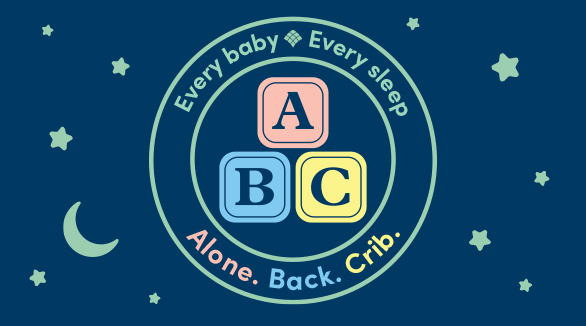
Your guide to infant safe sleep
As a parent or caregiver of a newborn, you're likely experiencing many different emotions — on top of feeling completely exhausted at all hours of the day and night. We know that baby safety is a constant worry, whether this is your first child or your fourth. Setting up a safe sleep environment for your baby and following safe sleep guidelines is an important part of keeping your baby safe.
Reducing the risk of sudden unexpected infant death (SUIDs)
It's completely normal to feel concerned when you hear the phrase "sudden unexpected infant death" (SUID) or "sudden infant death syndrome" (SIDS). But by understanding it, you can focus on simple, effective steps that support your baby's safety.
SUID is an umbrella term for the sudden and unexpected death of a baby younger than 1 year old. SUID is used when the cause of death isn't obvious right away, but may be due to accidental suffocation in a baby's sleep environment.
It's important to know that SUID is very rare, and researchers and care teams have learned a great deal about how to reduce the risk of SUID. The most effective steps you can take to keep your baby safe is to create a safe sleep environment by following the ABCs of safe sleep.
The ABCs of safe sleep: Alone, back, crib
For every baby, and for every sleep, follow the ABCs of safe sleep to protect your baby at naps and nighttime until they are 1 year old.
Alone
For every sleep, your baby should have their own separate sleep space. They should not co-sleep in a bed or on a couch or chair with you or anyone else. We know that you want to snuggle with your infant as much as possible, but sharing a sleeping space with them increases the risks of SUID because they may:
- Accidentally suffocate if their face is covered.
- Get trapped in tight spaces, like between a mattress and a wall.
- Overheat.
Your baby should also be completely alone in their sleep space, with no blankets, pillows, bumpers, or soft toys that they could accidentally roll into.
Room sharing for closeness and safety
Room sharing means your baby sleeps in your room, near your bed, but not in your bed. This can help you stay close while keeping your baby in a safe sleep environment. It also can make it easier to feed, comfort, and check on your baby quickly during the night.
While we know you may want to get extra cuddles in, it's very important that you do not co-sleep or bed-share with your baby. Your newborn is safest in their own space.
Back
It's important to put your baby down on their back to sleep every time, even once they're able to roll over to their stomach by themselves. Do not place your baby on their stomach, side, or chest for sleep. This helps keep their airway open and clear, which makes it easier for them to breathe while sleeping. Your baby's natural reflexes prevent them from choking if they spit up on their back, so sleeping in this position is still the safest, even for babies with reflux.
As your baby grows, they'll learn to roll from their back to their belly and back again. Once they're able to do this on their own, you don't need to move them if they roll to their stomach while sleeping. This is because they've developed the strength and control to manage their position.
Swaddling your baby safely
Tightly wrapping your baby in a swaddle can help soothe them in the first few months after they're born. If you do swaddle your baby, do not put any weighted objects inside the swaddle or use weighted swaddles. Stop swaddling as soon as your baby starts showing signs of trying to roll over, which usually happens around 3 to 4 months. Once your baby ages out of the swaddle, you can transition them to a sleep sack, a safe, wearable blanket for babies and toddlers.
Crib
Your baby should always sleep in a crib, bassinet, or portable play yard. Your baby's sleep space should:
- Be firm. This means the surface should not sink in when your baby lies on it.
- Be flat. The space should be completely flat, with no incline or slope.
- Have a mattress that fits the space. The mattress should fit tightly inside the crib and leave no gaps around the edges.
- Have only a fitted sheet. The only thing that should be on the mattress is a tightly fitted sheet.
Your baby's sleep space should only ever have your baby in it. Before putting your baby down to sleep, remove pillows, quilts, heavy blankets, or loose sheets from their sleep space. Don't put any mattress toppers or soft padding on the crib mattress. Your baby's sleep space should also not have any bumper pads — even ones made of mesh.
Always move your sleeping baby from other spaces
You never want to wake a sleeping baby, but if your baby falls asleep in their car seat, stroller, swing, infant carrier, baby lounger, or bouncer, it's important to move them to their crib, portable play yard, or other safe sleep surface as soon as possible.
When in doubt, remember your ABCs
New parenthood comes with a lot of joy — and a lot of exhaustion. When you're navigating sleep deprivation and conflicting advice, just remember alone, back, crib for every sleep to keep your baby safe.
Other safe sleep tips
In addition to putting your baby down for every sleep alone, on their back, and in their crib, there are other ways to help keep them safe while they're sleeping.
Avoid overheating
You want your baby to be comfortable while they sleep, but never too warm. The room your baby sleeps in should be between 68 and 72 degrees Fahrenheit.
If you're worried about your baby getting cold, you can dress them in one more layer than you would wear to be comfortable. You can also put them in a sleep sack, a safe, wearable blanket for babies and toddlers. This is a safe alternative to blankets, which should not be given to your baby until they turn 1 year old.
Before putting your baby to sleep, check for signs that they may be too warm. This includes sweating, a hot chest, or red skin. You should never put a hat on your baby while they're inside, because their head helps them regulate their body temperature.
Offer a pacifier
Giving your baby a pacifier at naptime and bedtime can both soothe them and help keep them safe. If you are breastfeeding your baby, it's usually best to wait until your baby is around 3 to 4 weeks old before offering a pacifier to make sure they're able to latch correctly.
If you do offer a pacifier, never hang it around your baby's neck or secure it to their clothes with a string. This can be a choking or strangulation hazard.
Keep your home smoke-free
Smoking or vaping during pregnancy, or around your baby after they're born, increases their risk of developing health problems. If you do smoke or vape, don't do it near your baby even if you're outside. Keep your car and home completely smoke-free to protect your baby's lungs and overall health.
Contact us with questions or concerns
If you have any questions about how to keep your baby safe while they're sleeping, schedule an appointment with your baby's pediatrician.
Need a new pediatrician? Call to schedule an appointment with a pediatrician near you:
If you live in Pittsburgh and the surrounding area, call (412) DOCTORS 412-362-8677. If you live in Erie, call 814-CONNECT 814-266-6328.
-
Appointments
Women's Health(412) DOCTORS