

Neurogastroenterology at AHN: Relief for GI Conditions Through a Holistic, Patient-Centered Approach
Published Dec 5, 2025
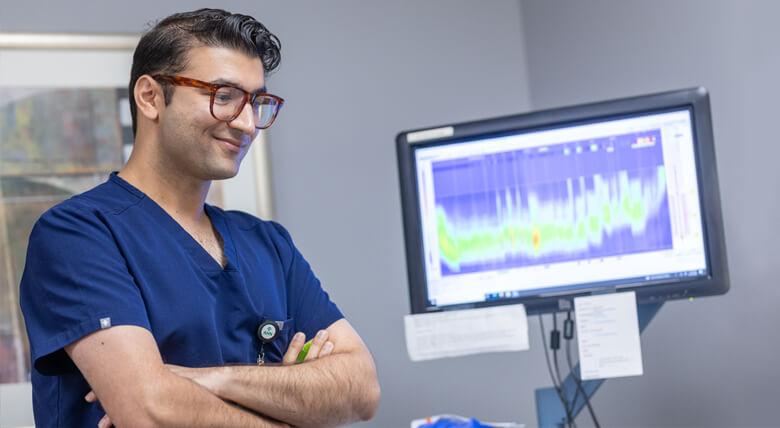
Functional gastrointestinal (GI) and motility disorders affect an estimated 25 million people in the U.S., yet up to 80% of patients never seek care.* The AHN Division of Gastroenterology, Hepatology, and Nutrition is closing that gap through specialized expertise in neurogastroenterology and methods that integrate mind and body to identify and treat these disorders.
Bridging the mind–gut connection
Neurogastroenterology focuses on the relationship between the nervous and digestive systems, also called the gut-brain axis. Disruptions in this pathway can lead to conditions like irritable bowel syndrome (IBS) and chronic constipation, or other motility disorders, often presenting with abdominal pain, bloating, dysphagia, nausea, and reflux.
“When communication between the brain and gut is disrupted, symptoms can extend far beyond GI discomfort,” said Saad Javed, MD, director of Gastroenterology, Neurogastroenterology and GI Motility at AHN Medicine Institute. “These patients often experience weight loss, fatigue, or depression, which significantly impacts quality of life. Our goal is to restore that balance through a truly comprehensive model of care.”
Advanced neurogastroenterology diagnostics
Causes of functional GI and motility disorders can be complex and vary greatly in each patient, however, recent studies suggest that immune-mediated abnormalities, certain infections, drug use, genetic composition, and psychosocial factors may contribute to these conditions. Chronic illnesses like Parkinson’s disease, diabetes, and Alzheimer’s disease have also been linked to GI disorders.
Providers in AHN’s Neurogastroenterology Program provide targeted diagnostic evaluation to uncover underlying motility and functional abnormalities. The team employs advanced testing, including:
- Endoscopic evaluation
- Radiographic and nuclear imaging
- Gastric emptying scans
- High-resolution esophageal and anorectal manometry
Providers also place an emphasis on psychological assessments to identify factors like stress and anxiety that may be contributing to a patient’s condition.
Comprehensive and collaborative treatment
The neurogastroenterology team collaborates across specialties — including behavioral health, nutrition, and pharmacy — to develop individualized treatment plans. Interventions may include dietary modification, pharmacologic therapy, cognitive behavior therapy, surgical procedures, or the use of neuromodulators such as antidepressants and anxiolytics.
“If not complete resolution, the variety of treatment options allows us to reduce symptoms significantly,” said Dr. Javed. “We see this enhance the patient's quality of life, their sense of wellbeing, and their capacity to engage in everyday activities.”
How to refer:
If your patients are searching for answers to address GI discomfort or other symptoms, refer them to AHN’s Neurogastroenterology Program. Call 844-MD-REFER 844 637-3337.
*
Source: Functional and Motility Disorders. AHN.org.
Published Dec 5, 2025
About Saad Javed, MD
Saad Javed, MD, is a board-certified gastroenterologist with AHN Medicine Institute. He is the Director of General Gastroenterology, Neurogastroenterology, and GI Motility, and specializes in the diagnosis and treatment of various diseases and problems of the gastrointestinal tract. He is skilled at endoscopies, colonoscopies, esophageal manometries, anorectal manometries, video endoscopies, and pH testing.
About AHN Medicine Institute
The AHN Medicine Institute comprises over 600 specialists across 17 subspecialties, providing exceptional care through nationally recognized Centers of Excellence. We are dedicated to offering leading-edge technologies, procedures, and clinical trials to ensure the best possible outcomes for our patients from western Pennsylvania and beyond.