

Don't Let Endometriosis Hold You Back
Published Dec 31, 2025
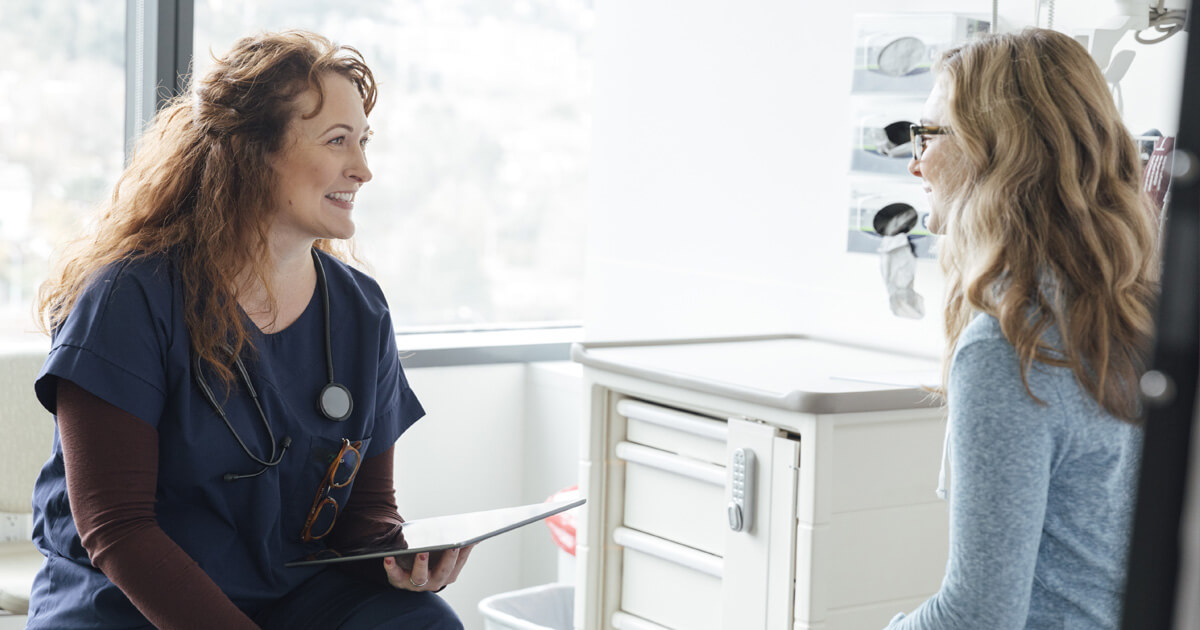
Periods often cause uncomfortable symptoms and cramping. But for some people, the pain can be unbearable. If your period pain keeps you from work, school, or activities you enjoy, it could be a sign of endometriosis.
AHN West Penn Hospital’s OB-GYN team helps diagnose and treat endometriosis, so you can find relief and get back to feeling like yourself.
What is endometriosis?
Endometriosis happens when tissue similar to the inner lining of the uterus grows outside of the uterus. It often affects the ovaries, the fallopian tubes, and the tissue lining the pelvis. The pain it causes can be easy to mistake for normal period cramps.
Symptoms of endometriosis include:
- Heavy period bleeding
- Hair growing in unexpected places, such as the face, stomach, or chest
- Bloating or stomach pain
- Cysts (growths) on the ovaries or pelvis
- Pain during or after sex
- Sharp pelvic pain, especially during your period
On average, it takes about seven years for patients to get diagnosed with endometriosis. This is because most women start having symptoms in their teens and learn to suffer through pain without answers.
“Many women live with chronic pain for years before talking to their doctor,” said Rachel Cullifer, MD, OB-GYN at West Penn. “If your pain affects your daily life, talk to your doctor. You deserve to feel better, and help is available.”
Diagnosing endometriosis and treating pain
Your doctor will start by reviewing your symptoms and health history — and your family’s health history — to see what treatment might help you most. If you have an immediate family member with endometriosis, your risk for it is higher.
Many patients start with medication to manage pain. Birth control or a progesterone-only (reproductive hormone) endometriosis medication can help make periods lighter and reduce inflammation.
The only way to confirm endometriosis is through laparoscopic surgery using a camera to look outside the uterus. If endometriosis is found during laparoscopic surgery, your doctor may recommend excision surgery to remove the tissue causing problems outside your uterus. They may be able to do diagnostic and excision surgery in the same procedure, depending on what they find.
Excision surgery is minimally invasive, meaning only small cuts are used. During surgery, your doctor can see and remove any tissue that looks like endometriosis. The tissue is then sent to a lab for testing to confirm the diagnosis.
“The thought of surgery can feel overwhelming,” said Dr. Cullifer. “But for many patients, it’s life-changing. Surgery can both confirm what’s going on and bring real pain relief.”
After surgery, most patients go home the same day. Recovery takes a few weeks, and patients may experience mild bloating, soreness, and tiredness during recovery. After the procedure, you’ll have several follow-up visits with your doctor to discuss your results and what treatment you may need to prevent symptoms from coming back.
Does endometriosis cause infertility?
Many women with endometriosis can still get pregnant. In fact, 70% of patients with endometriosis are still able to become pregnant without medical intervention.*
Endometriosis can make it harder to become pregnant in the first place. The condition can cause various complications when trying to get pregnant, such as placenta previa (placenta blocks the opening of the uterus), ectopic pregnancy (fetus develops outside the uterus), pre-term birth, and miscarriage.
Your doctor may recommend waiting until after one normal period following endometriosis treatment to start trying for a baby.
For women who are done having children or don’t plan to get pregnant, a hysterectomy (surgery to remove the uterus) may be an option for long-term pain relief.
“Our goal is to help you make the choice that fits your life,” said Dr. Cullifer, “whether that means growing your family or finding lasting relief from pain.”
Get support to manage your pain
The OB-GYN team at AHN West Penn Hospital wants to help you manage endometriosis so you can find relief. If you have painful periods or think you might have endometriosis, schedule an appointment with an AHN OB-GYN provider.
*
Source: Endometriosis & Pregnancy: What You Need to Know. centerofendometriosis.com.
Published Dec 31, 2025
About Rachel Cullifer, MD
Rachel Cullifer, MD, is an OB-GYN with AHN Women, specializing in minimally invasive gynecologic surgery, including robotic and laparoscopic surgery and advanced hysteroscopy. Additionally, she treats patients for pelvic pain, endometriosis, fibroids, and abnormal uterine bleeding. Dr. Cullifer went to medical school at West Virginia University School of Medicine in Morgantown, West Virginia. She did her residency at University of Maryland Medical Center in Baltimore, Maryland and did her fellowship in minimally invasive gynecologic surgery at ChristianaCare Health System in Newark, Delaware. Dr. Cullifer is certified by the American College of Obstetricians and Gynecologists and is affiliated with the American Association of Gynecologic Laparoscopists. She sees patients ages 18 and older.
About AHN West Penn Hospital
West Penn Hospital, in Pittsburgh’s Bloomfield neighborhood, is an academic medical center with an international reputation for excellence and innovation in patient care, education, and research. Established in 1848, it was the first hospital in western Pennsylvania to achieve three consecutive Magnet® designations for excellence in nursing services.