

Wearable Technology Meets Advanced Electrophysiology at AHN
Published Mar 24, 2026
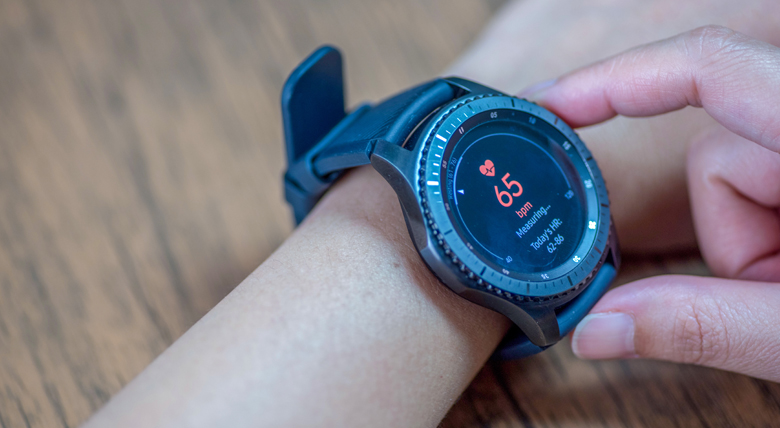
As wearable technologies like smartwatches and rings become more commonplace, electrophysiologists at AHN Cardiovascular Institute are translating their continuous heart rhythm data into clinically meaningful insights. The institute’s Electrophysiology (EP) Program leverages this information for earlier detection, refined risk stratification, and optimized long-term arrhythmia management.
Integrating wearable data into clinical protocols
Atrial fibrillation (AFib) and other arrhythmias are increasingly first detected outside of traditional health care settings due to consumer-grade monitoring devices. While prescription-grade monitoring is used when necessary, wearable recordings are often sufficient to confirm irregular rhythms, enabling earlier evaluation and intervention for patients who might not otherwise seek care.
The EP Program actively incorporates this data into patient management in several ways:
- Initial diagnosis – Wearable alerts prompt evaluation before overt symptoms, enabling earlier anticoagulation and stroke risk mitigation.
- Burden assessment – Devices that quantify AFib burden over time support individualized rhythm-control strategies and ablation decisions.
- Post-ablation monitoring – Patient-recorded electrocardiogram (ECG) tracings help detect recurrence, reducing reliance on short-term patch monitors.
“The FDA recently approved the Apple Watch to be used in outcomes for clinical trials, specifically measuring AFib burden detected by the device,” said Joshua R. Silverstein, MD, FHRS, an electrophysiologist with AHN Cardiovascular Institute. “That recognition validates this data at the highest levels and confirms that wearable-derived rhythm information is both important and clinically meaningful.”
Data-driven detection streamlines care delivery
Consumer-grade wearables with ECG capability have reshaped the AFib diagnostic pathway. Instead of relying solely on short-duration patch monitors, patients can capture infrequent arrhythmias in real time, reducing diagnostic delays.
Operational efficiencies within the EP Program ensure timely intervention, with many AFib ablations performed within weeks of consultation to reduce prolonged symptom burden. Additionally, AHN has implemented structured education such as the “AF Action Plan” to guide patients on when to contact the care team versus when emergency evaluation is warranted.
“By combining continuous monitoring with defined action pathways, the program helps patients avoid unnecessary ED visits while ensuring urgent concerns are addressed promptly,” said Dr. Silverstein.
Expertise beyond standard AFib
The EP Program has long been at the forefront of innovative techniques and technologies for treating heart rhythm disorders. In fact, the team treats a broad spectrum of complex arrhythmias beyond paroxysmal AFib, including:
- Ventricular tachycardia
- Supraventricular tachycardias
- Premature ventricular contractions (PVCs)
- Inherited arrhythmia syndromes
- Arrhythmias in patients with congenital heart disease
As part of the Mario Lemieux Center for Heart Rhythm Care at AHN, the EP Program approaches every arrhythmia with a comprehensive diagnostic lens. Rather than viewing rhythm disturbances in isolation, the team evaluates whether an arrhythmia represents a primary electrical disorder or signals a broader underlying pathology.
The multidisciplinary framework reflects AHN’s ongoing efforts to formalize criteria consistent with an AFib Center of Excellence. Beyond electrophysiology, this model integrates heart failure management, anticoagulation oversight, sleep medicine, weight optimization, and lifestyle interventions into a coordinated care pathway.
How to refer
Providers can refer patients with suspected or confirmed arrhythmias through Epic, where referrals are triaged by a dedicated nurse navigator. You may also call 412-359-6699 to reach the EP Program directly.
Patients reporting smartwatch-detected irregular rhythms or increased AFib burden — particularly if symptomatic or at elevated stroke risk — are seen on an urgent basis.
Published Mar 24, 2026
Joshua R. Silverstein, MD, FHRS, is an electrophysiologist who specializes in the treatment of atrial and ventricular arrhythmias, as well as employing the newest techniques in pacemaker and defibrillator implants. He has been published for his vast expertise in cardiac electrophysiology. Dr. Silverstein sees patients of all ages at Allegheny General Hospital.
About Cardiovascular Institute
The AHN Cardiovascular Institute offers comprehensive, patient-first care for all types of heart conditions, from common to complex, delivered by a team with a rich legacy of innovation and compassionate service. We are leaders in cardiology, cardiovascular surgery, and advanced research, consistently achieving excellent patient outcomes through evidence-based medicine, pioneering techniques, and a commitment to high-quality care.