

Comprehensive Stroke Network Expands Access to Specialized Care
Modified Aug 31, 2026
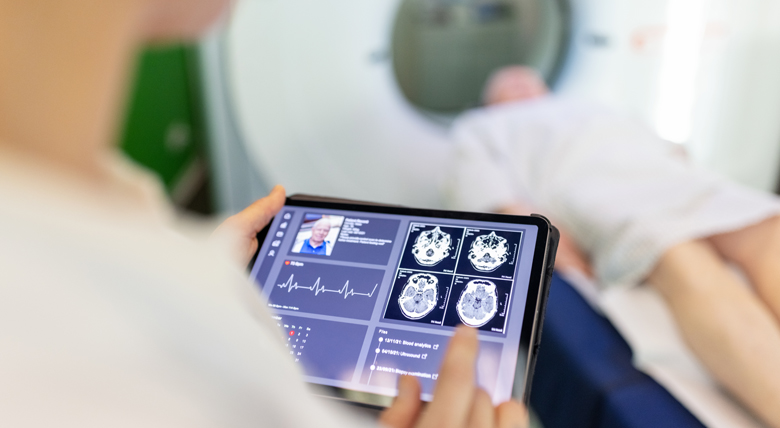
Stroke care has evolved dramatically over the last decade, giving physicians more time for intervention than the traditional 4.5-hour treatment window. While rapid treatment remains essential, AHN Neuroscience Institute's Stroke Centers employs advanced imaging and coordinated care pathways to help referring providers identify more patients who may benefit from specialized care that supports long-term outcomes.
Delivering consistent stroke care across western Pennsylvania
AHN Stroke Centers are built on a hub-and-spoke model that emphasizes keeping patients close to home whenever possible. Our Joint Commission-certified stroke centers offer two levels of advanced care for patients experiencing stroke.
Patients requiring medical management receive consistent, evidence-based stroke care at Primary Stroke Centers across the network, while complex stroke cases needing specialized procedures, such as endovascular therapy, are transferred to the Comprehensive Stroke Center at AHN Allegheny General Hospital (AGH).
“Through this model, patients not only receive the same evidence-based care throughout AHN, regardless of where they enter the system, but they’re able to stay close to home as well,” said Rahul Chandra, MD, a vascular neurologist and the medical director for telestroke at AHN.
In addition, telestroke services are available at 22 sites, ensuring broad geographic coverage for acute care access. Emergency physicians can send a direct alert to the stroke team and receive a response in an average time of 22 to 23 seconds, supporting a door-to-needle time of 16 to 17 minutes for IV thrombolytic therapy.
Advanced imaging expands treatment opportunities
Rather than focusing primarily on the onset of symptoms, AHN physicians now utilize tissue-based decision-making to ensure patients receive the right care at the right time. Advanced imaging technologies help uncover the underlying causes of stroke, identify salvageable brain tissue, and guide treatment decisions that previously would not have been possible.
AHN's advanced stroke imaging capabilities include:
- CT perfusion imaging, which measures blood flow to the brain to identify tissue that remains viable, helping physicians determine whether patients may benefit from intervention beyond the traditional treatment window.
- Wake-up stroke protocols, available at AGH and AHN Saint Vincent Hospital, which use MRI to evaluate patients whose last known well time is uncertain, helping determine whether they remain candidates for IV thrombolytic therapy.
- Vessel wall imaging, which provides detailed visualization of blood vessel walls to help physicians better understand the underlying cause of a stroke and tailor long-term prevention strategies.
Coordinated follow-up supports recovery and secondary stroke prevention
AHN stroke navigators provide structured follow-ups for both patients and their caregivers at 30, 60, and 90 days post-stroke — coordinating appropriate imaging such as CT angiographies or ultrasounds as needed. Many patients also continue their care through AHN's growing network of satellite stroke clinics that enable stroke specialists to monitor recovery, track ongoing stroke risk factors, and help ensure patients remain connected to the care they need, close to home.
Throughout treatment, the stroke team works closely with referring providers, sharing recommendations through Epic and clinic documentation while allowing primary care physicians to remain the central coordinator of each patient's ongoing medical care.
Innovative therapies expand stroke recovery options
For select patients who continue to experience functional limitations after stroke, AHN offers advanced therapies that can help restore movement and improve quality of life.
One example is Vivistim®, a vagus nerve stimulation (VNS)-based therapy that pairs electrical stimulation with occupational therapy to help patients regain upper extremity function after stroke. Among the first programs of its kind in the country, AHN's multidisciplinary team evaluates eligible patients whose recovery has plateaued despite conventional rehabilitation.
"Patients have experienced some remarkable improvements," said Dr. Chandra. "We've seen patients who had regained gross arm movement but couldn't perform fine motor tasks be able to write again after treatment."
When to refer
Dr. Chandra believes that when in doubt, it's always appropriate to seek a stroke evaluation. Early evaluation may help reduce the risk of future cerebrovascular events.
Physicians should consider referring patients with:
- Recent ischemic or hemorrhagic stroke
- Recurrent TIA
- Cryptogenic stroke
- Diagnostic uncertainty
- Younger stroke patients
- Patients with abnormal imaging suggesting prior stroke
- Patients needing advanced evaluation or secondary prevention
How to refer
If you have a patient who may benefit from care through AHN Neuroscience Institute’s Stroke Centers, please call 1-844-MD-REFER 844-637-3337 or message Dr. Chandra through Epic for a consultation.
Vivistim® is trademark of MicroTransponder Inc. and is used with permission.
Published Aug 31, 2026
Modified Aug 31, 2026
About Rahul Chandra, MD
Rahul Chandra, MD, is a vascular neurologist with the AHN Neuroscience Institute who specializes in the diagnosis and treatment of ischemic and hemorrhagic stroke, transient ischemic attack (TIA), cerebrovascular disease, and stroke prevention. He has particular expertise in advanced stroke imaging, tissue-based treatment decision-making and comprehensive post-stroke management, working closely with referring providers to optimize long-term outcomes for patients throughout western Pennsylvania.
The AHN Neuroscience Institute is an internationally recognized academic referral center, offering advanced treatment for all neurological conditions, including leadership in complex spine and brain surgeries, comprehensive stroke care, and specialized therapies for movement disorders. We are committed to pioneering new therapies and procedures, ensuring patients receive leading-edge technologies and clinical trials for the best possible outcomes.