

Learn more about our appointment options, locations, and resources that are at your disposal.

Adult Congenital Heart Disease Clinic
About the Adult Congenital Heart Disease Clinic
AHN’s first Adult Congenital Heart Disease (ACHD) Clinic specializes in providing comprehensive care for individuals 16 and older who are born with heart defects or those diagnosed in adulthood. Our clinic lead, Dr. Nael Aldweib, addresses your unique and evolving medical needs as a dedicated congenital heart disease specialist. Dr. Aldweib had his team are focused on providing tailored, multidisciplinary, and comprehensive care to each of their patients.
Our program involves a multidisciplinary team of specialists creating your care plan, including:
- General cardiologists
- Interventional cardiologists
- ACHD specialist cardiologists
- Cardiothoracic surgeons
- Electrophysiologists
- Cardio-obstetrics expert
- Advanced imaging experts
Appointments
Adult Congenital Heart Disease Program
(412) DOCTORS
Adult congenital heart disease (ACHD) FAQs
For those affected by ACHD, there are often many questions about treatment and care. At AHN, we are focused on providing our patients with the trusted resources and dedicated health care professionals to help them feel confident in their treatment plan. Your AHN care team is always available to answer any questions you may have, but we’ve rounded up some of our patients’ most frequently asked questions about ACHD to help.
What is the life expectancy of adults with congenital heart disease?
The life expectancy of adults with CHD varies significantly depending on the specific type and severity of the heart defect, as well as the success of any interventions or treatments received. While some individuals with simple defects may have a normal life expectancy, others with more complex conditions may have a reduced life expectancy. Regular follow-up care with a cardiologist specializing in ACHD is crucial for managing the condition and optimizing long-term health.
Can you live with congenital heart disease as an adult?
Many individuals with CHD live full and active lives as adults. However, living with CHD as an adult often requires ongoing medical management, including regular check-ups, monitoring for complications, and sometimes medications or further procedures.
What are the symptoms of congenital heart disease in adults?
Symptoms of CHD in adults can vary widely. Some individuals may have no symptoms, especially if their defect is mild or was successfully repaired in childhood. Others may experience symptoms that can develop gradually over time or appear suddenly. Common symptoms include:
- Shortness of breath: If you become short of breath with little exertion, it’s important to see your care provider.
- Fatigue: Feeling unusually or excessively tired, especially if you get adequate rest.
- Chest pain: Angina-like pain, which is often felt in the middle of the chest behind the breastbone. It can also radiate to the left arm, shoulder, neck, jaw, or back.
- Heart palpitations: Feeling like your heart is racing, pounding, or skipping beats.
- Swelling (edema): This can often be seen in the legs, ankles, or feet.
- Dizziness or fainting (syncope): If you experience dizziness or fainting, you should see your doctor.
- Bluish tint to the skin or lips (cyanosis): This is more common in complex unrepaired defects.
- Arrhythmias: Irregular heart rhythms can be a symptom of CHD.
It's important to note that these symptoms can also be indicative of other conditions, so a proper diagnosis from a health care professional is essential.
What causes congenital heart disease in adults?
Congenital heart disease is present at birth, meaning it develops before a baby is born. Therefore, what causes CHD in adults is the same as what causes it in infants. The exact cause is often unknown, but it is believed to be a combination of genetic and environmental factors. Possible contributing factors include:
- Genetic factors: Inherited genes or chromosomal abnormalities (e.g., Down syndrome).
- Maternal illnesses: Certain infections during pregnancy (e.g., rubella).
- Maternal medications: Use of certain drugs during pregnancy.
- Maternal exposure to toxins: Alcohol or illicit drugs during pregnancy.
- Maternal medical conditions: Such as uncontrolled diabetes or lupus.
It's important to clarify that CHD is not something you develop as an adult; rather, it is a condition you are born with that continues into adulthood.
Can you be diagnosed with congenital heart disease as an adult?
While many cases are diagnosed in infancy or childhood, it is possible for CHD to go undiagnosed until adulthood. This can happen for several reasons:
- Mild heart defects: Some heart defects are very mild and may not cause significant symptoms until later in life, if at all.
- Symptoms developing later: Symptoms might only appear or become bothersome due to the natural aging process, other health conditions, or changes in the heart over time.
- Incidental finding: CHD may be discovered incidentally during investigations for unrelated health issues or during routine medical examinations.
If you have concerns about heart symptoms or believe you may have undiagnosed CHD, it is important to consult with your doctor.
Treating congenital heart deficiencies
If you have a heart condition you were born with, or if you've had surgery for one, the Adult Congenital Heart Disease Clinic at AHN is designed specifically for you. We understand that living with a congenital heart condition as an adult comes with unique needs and questions. Your primary cardiologist, primary care physician, or family practice physician can refer you to our clinic.
Heart conditions and related health concerns
Our clinic helps manage a wide range of heart conditions and complications with precision and advanced treatment options. This all-encompassing care helps you find personalized solutions that will work for your condition.
Managing your specific congenital heart condition
Whether your heart defect was repaired in childhood or is still being monitored, we provide specialized care for conditions including:
- Holes in the heart: This includes conditions where there are openings between the heart's chambers, such as atrial septal defect (ASD) or ventricular septal defect (VSD), and also atrioventricular canal defects.
- Heart valve problems: We treat issues with heart valves that control blood flow, including aortic stenosis and regurgitation, pulmonary valve stenosis and regurgitation, and Ebstein’s anomaly.
- Narrowed vessels or abnormal blood flow: Problems with the large blood vessels connected to the heart, such as coarctation of the aorta, patent ductus arteriosus (PDA), peripheral pulmonic stenosis, and other aorta and blood vessel conditions like vascular ring. This also includes conditions where blood vessels connect incorrectly, like total or partial anomalous pulmonary venous return and anomalous coronary artery.
- Complex conditions: These involve several defects that can affect how blood flows through the heart, such as tetralogy of Fallot, transposition of the great arteries, and hypoplastic left heart syndrome. Even if your condition was initially fixed with surgery, it's vital to continue specialized follow-up care, as new challenges can arise over time.
Common heart health challenges and complications
Many adults with congenital heart disease may experience certain issues. Our physicians can help with:
- Heart rhythm problems (arrhythmias): If your heart beats too fast, too slow, or irregularly.
- Heart weakness or fatigue (heart failure): When your heart needs help pumping blood effectively.
- High blood pressure in the lungs (pulmonary hypertension): A condition that can affect many types of congenital heart disease.
- Concerns about your aorta: The body's main artery, which can sometimes be affected (including aorta and blood vessel conditions mentioned above, and specific genetic risks).
- Increased risk of infection (endocarditis): Guidance on how to prevent infections of your heart.
Support for your overall health
We don't just treat your heart condition; we support your overall well-being in a multidisciplinary manner. This includes:
- Management of genetic conditions affecting the heart and blood vessels: We provide specialized care for individuals with genetic syndromes that impact heart health, such as Marfan syndrome, Loeys-Dietz syndrome, Turner syndrome, Williams syndrome, Noonan syndrome, Shone syndrome, and Scimitar syndrome.
- Planning for pregnancy: For those who are pregnant or hope to be pregnant and have ACHD, we offer support, and specialized care.
- Exercise and activity guidance: Staying active and getting regular physical activity is important for everyone. Understanding the effects of adult CHD, we can determine safe levels of physical activity that can help manage your condition.
- Managing other health conditions: If you have high blood pressure, diabetes or another health issue, we help you navigate how your heart disease might interact and provide treatment to control or manage it.
- Understanding your medications: Being on the right treatments and medications is critical to your overall condition.
- Emotional and mental well-being: This includes connecting you with resources and support for living with a chronic condition.
- Genetic counseling: Since CHD is a genetic condition, we can help answer your questions about potential impacts to your family or future family planning.
- Transitioning care: For young adults moving from pediatric to adult care starting at 16-years-old. Our goal is to help you live the healthiest, fullest life possible with your congenital heart condition.
Congenital heart disease treatment
At AHN, your congenital heart disease treatment will be tailored to your specific needs by a team of highly experienced and compassionate cardiologists who have an advanced understanding of this disease.
Continued monitoring
If you have congenital heart disease, it’s critical to get your annual tests and have continued monitoring for the rest of your life. This includes:
- Regular checkups with your cardiologist: Your cardiologist will ask about any new symptoms (shortness of breath, fatigue, chest pain, palpitations, dizziness, swelling), discuss changes in activity tolerance, and review medications. They will listen to your heart and lungs, check your blood pressure and pulse, and assess for any signs of fluid retention.
- Electrocardiogram (ECG/EKG): This is used to check the heart's electrical activity. It can detect arrhythmias (irregular heartbeats), signs of heart muscle strain, or previous damage. It’s usually done annually for most ACHD patients.
- Echocardiogram (echo): This is a key imaging test using ultrasound waves to visualize the heart's structure and function. Typically performed annually, or more frequently if there are significant changes or new concerns. It provides detailed information on:
- Heart chamber size and function
- Valve structure and function (stenosis, regurgitation)
- Blood flow patterns within the heart and great vessels
- Residual shunts or obstructions
- Pulmonary artery pressures
- Blood work: Blood work is critical to understand your overall health and well-being. We check for:
- Routine checks: Complete blood count (CBC), kidney function (creatinine, BUN), liver function tests, electrolytes.
- Thyroid function: Important, as thyroid issues can impact heart rhythm and function.
- Lipid panel: Cholesterol levels to assess for atherosclerotic risk, especially in older ACHD patients.
- INR/PTT: If on blood thinners.
- Oxygen saturation: Especially for cyanotic heart conditions.
- Advanced imaging: As needed, not necessarily annually for all and includes:
- Cardiac Magnetic Resonance Imaging (MRI): Provides very detailed anatomical and functional information, especially useful for assessing complex defects, ventricular volumes, scar tissue, and great vessel anatomy (e.g., aorta, pulmonary arteries). An MRI is often done every two to five years or when specific questions arise.
- Cardiac computed tomography (CT): CT scans are useful for visualizing complex vascular anatomy, especially for surgical planning or when MRI is contraindicated.
- Exercise testing (stress test): Exercise testing assesses functional capacity, identify exercise-induced arrhythmias, evaluate symptoms that only appear with exertion, and measure oxygen consumption (VO2 max) in some cases. This can be a treadmill or bike test, sometimes with echocardiography or nuclear imaging.
- Holter monitor or event recorder (as needed): If there are concerns about arrhythmias (palpitations, dizziness, fainting spells), these devices record the heart's electrical activity over 24 hours, several days, or even weeks to catch infrequent events.
Interventional and surgical procedures
Our experienced AHN cardiologists and health care providers use interventional and surgical procedures to treat a number of different heart conditions. Each procedure is thoughtfully considered based on the patient’s needs, and may include:
- Cardiac catheterization: This often includes performing diagnostic and interventional procedures (e.g., stent placement, balloon angioplasty, transcatheter valve replacement) to address structural heart issues.
- Cardiac surgery: We collaborate with congenital heart surgeons who have expertise in repairing or palliating complex congenital heart defects in adults.
Education and support
One of the most important aspects of care is the education and support we provide our patients. In order for you to feel confident in your care plan, we believe it’s critical for you to have trusted information and meaningful support. Our education and support options include:
- Patient education: AHN is focused on empowering patients with knowledge about their specific condition, treatment options, and self-management strategies through patient education opportunities.
- Psychosocial support: Addressing the emotional and psychological challenges that can arise from living with a chronic heart condition is essential in supporting your whole health and well-being.
- Genetic counseling: AHN offers genetic evaluation and counseling for patients and their families, so you have the opportunity to get a greater understanding of your condition.
Adult congenital heart deficiencies specialists
Led by Dr. Nael Aldweib, the team of experts on adult congenital heart disease is dedicated to each patient’s individualized treatment and care plan. Our cardiologists have dedicated their professional careers to advancing treatment options and improving patient health outcomes. We also connect our patients with social workers and behavioral health support providers who can offer additional care and resources.
Adult Congenital Cardiac Disease
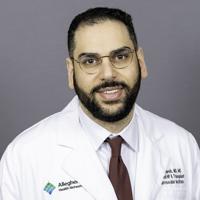
Cardiologist
Heart Failure and Transplantation Cardiology
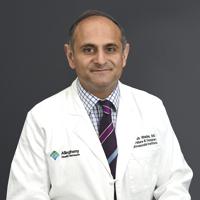
Cardiologist
Cardio obstetrics

Cardiologist
Electrophysiology
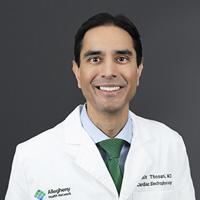
Electrophysiologist
Advanced Imaging
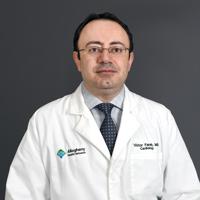
Cardiologist
Cardiothoracic Surgery and Transplant
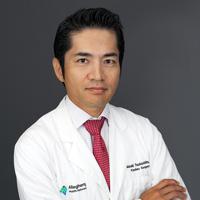
Cardiothoracic Surgeon
Interventional Cardiology
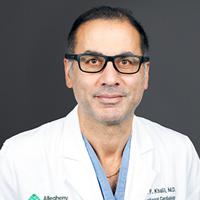
Interventional cardiologist

Genetic Counselor
Appointment coordinator
Adult congenital heart disease appointment coordinator
How to get care
If you are looking for continued congenital heart condition care or to connect with one of our dedicated adult congenital heart disease specialists, call 412-359-4773 or email Tracey.Ater@ahn.org to connect with Tracey Ater, our adult congenital heart disease appointment coordinator.
We are available for virtual visits or in-person at:
Allegheny General Hospital
320 East North Avenue
Pittsburgh, PA 15212
GET DIRECTIONS
What to expect
At your first appointment, Dr. Aldweib will review your health history, including test results. He will create a treatment plan based on your specific needs. This may include referrals to other treatments and tests that may include:
- Electrocardiogram (ECG/EKG)
- Echocardiogram (echo)
- Consultation with our cardio-obstetrics expert if you are currently pregnant or planning to become pregnant
- Blood work
- Advanced imaging such as a Magnetic Resonance Imaging (MRI) or Computed Tomography (CT) scan
- Exercise testing (stress test)
Clinical trials and research
If you would like to participate in a clinical trial and help our innovative team discover groundbreaking treatment solutions, ask your doctor if you’re eligible to participate in one. Find currently active clinical trials that are open for participation.
What is a clinical trial?
Clinical trials are studies that try to answer questions about new ways to treat adult congenital heart disease. You participate in a clinical trial only if you volunteer to do so and meet criteria for inclusion in the study, and you can stop participating in a trial at any time.
Who can join a clinical trial?
The plan for the trial, called a protocol, explains what the trial will do and how the study will be done. Based on the questions the research is trying to answer, each clinical trial protocol outlines specific criteria necessary to be eligible to join the trial.
Common criteria for entering a trial are:
- Having a certain type of disease.
- Having received a certain kind of therapy in the past.
- Being in a certain age group.
Federal rules help ensure that clinical trials are run in an ethical manner, with your rights and safety protected. It’s to ensure that you’re not put at increased risk by participating in the trial, and that the results of the study are accurate and meaningful.
Refer your patient to an AHN specialist
There are two ways for medical professionals, who are not a part of Allegheny Health Network, to refer their patients to an AHN specialist and request their first appointment. You can:
- Call (412) DOCTORS 412-362-8677.
- Go to Find Care to find the right AHN specialist and the most convenient location. Then refer your patient, provide relevant patient details, and request an appointment directly from the doctor's profile.
For more information about referring your patient to an AHN specialist, read the Independent Physician Referral FAQs.
After referring your patient
Once your patient is receiving care from an AHN specialist, you can view their test results, see their treatment plan, follow their treatment progress, and collaborate with our team using the EpicCare® Link™ platform.
If you are new to EpicCare Link, or need to request your own EpicCare Link account, read: EpicCare Link for Patient Follow-up, for user instructions and new account request forms.
When EpicCare Link is not an option for a patient's AHN medical records
If you can’t access your patient's AHN test results through the EpicCare Link platform, your patient will need to complete and submit the correct AHN Medical Records Release form, based on their state of residency. Support your patient’s request by downloading the correct medical records release form for them:
AHN Medical Records Release Form for New York state residents
EpicCare® is a registered trademark of Epic Systems Corporation and used with permission.
EpicCare® Link™ is a trademark of Epic Systems Corporation and used with permission.