

Cardiovascular and Thoracic Critical Care Division

About our Cardiovascular and Thoracic Critical Care Division

Our Cardiovascular and Thoracic Critical Care Division specializes in the comprehensive, perioperative management of critically ill patients with severe or life-threatening heart, vascular, and lung conditions. Our highly skilled cardiovascular and thoracic specialists have dedicated their professional lives to advancing treatment options for their patients. We also provide second opinions and transfers for those who have already had a procedure done, ensuring that those who require this specialized care receive it. At AHN, we provide care that is recognized for greatness:

  • Allegheny General Hospital (AGH) received a 3-star designation (the highest rating) from the Society of Thoracic Surgeons (STS) in five categories for its surgical care outcomes and quality metrics for coronary artery bypass graft surgery, aortic valve replacement, mitral valve replacement and repair, and multivalve procedures, as well as surgical valve replacement combined with coronary artery bypass graft surgery.*
  • Forbes and Jefferson Hospitals received 3-star designations in isolated coronary artery bypass graft surgery and aortic valve replacement with coronary artery bypass graft surgery, respectively from STS.
  • AGH is recognized as one of the top extracorporeal membrane oxygenation (ECMO) programs in the world by the Extracorporeal Life Support Organization (ELSO) through its designation of Platinum Level Center of Excellence.**
  • AGH was the first hospital in Pennsylvania — and one of only a few facilities in the country — to receive the American Heart Association’s (AHA) and Mitral Foundation’s Mitral Valve Repair Reference Center Award for a demonstrated record of superior clinical outcomes.***

If a heart, vascular, or lung condition is severe enough to threaten a patient's life or organ function and requires continuous, high-level medical and nursing intervention, it falls under the purview of the cardiovascular and thoracic intensive care unit (CTICU) in the division. We treat a wide array of severe and life-threatening heart, vascular, and lung conditions that require intensive monitoring and specialized interventions including: 

  • Heart conditions: These include care for heart attacks with complications, heart failure, vascular disease, arrhythmias, and pericardial disease.
  • Vascular conditions: Including aortic dissection or ruptures, repair of aortic aneurysms, severe peripheral vascular disease (acute limb ischemia), and complications from blood clots.
  • Lung conditions: These are often interrelated with cardiac issues or post-cardiothoracic surgery and include acute respiratory distress syndrome (ARDS), pneumonia or sepsis from respiratory failure, bleeding complications, and issues from severe COPD.
  • Thoracic conditions: Surgical treatment of lung cancer, COPD, esophageal cancer, esophageal diseases, and chest wall disorders.

At AHN, we are focused on providing exceptional care. Our multidisciplinary team works together to create a treatment plan specifically for you. We meet daily to discuss cases with other specialists to determine the best path forward. Those who are part of your care may include:

  • Cardiovascular and thoracic critical care physicians (intensivists): These physicians have training in multiple medical specialties and advanced subspecialty training in critical care medicine. They are the first-line medical decision-makers for critically ill patients in the CTICU, overseeing the overall care plan, making diagnoses, managing complex medical treatments, and coordinating with other specialists.
  • Critical care nurses (RNs and CCRNs): Our highly skilled registered nurses specialize in intensive care. They provide direct patient care, administer medications, monitor vital signs and complex cardiac devices, manage ventilators, perform assessments, and communicate constantly with the medical team and patients' families. 
  • Nurse practitioners (NPs) and physician assistants (PAs): These advanced practice providers often play a crucial role in daily patient rounds, ordering tests, adjusting medications, performing procedures, and coordinating care under the supervision of the attending critical care physician.
  • Respiratory therapists (RTs): These experts manage mechanical ventilation, oxygen therapy, and other respiratory support for patients who often have compromised breathing due to their cardiac condition or associated complications.
  • Pharmacists: Our clinical pharmacists specialize in critical care medication management, review medication orders, monitor drug interactions, adjust dosages for optimal patient outcomes, and provide drug information to the medical team.
  • Dietitians and nutritionists: Our experts assess patients' nutritional needs and develop appropriate feeding plans (oral, enteral, or parenteral) to support recovery, which is necessart for critically ill patients.
  • Physical therapists (PTs) and occupational therapists (OTs): These skilled therapists initiate early mobilization and rehabilitation to prevent deconditioning and aid in recovery, even for patients who are still critically ill.
  • Cardiac, vascular, and thoracic surgeons: Even outside the operating room, our cardiac surgeons, thoracic surgeons, and vascular surgeons are heavily involved in your care and offer consultation. This starts by providing guidance to create a comprehensive care plan with decision-making for any operative interventions, determining when to transition from the ICU and, ultimately, hospital discharge. 

What is critical care for cardiac patients?

Critical care for cardiac patients, often provided in a cardiac intensive care unit (CICU) or coronary care unit (CCU), focuses on immediate and intensive medical intervention for life-threatening heart conditions. This specialized care aims to stabilize the patient, prevent further damage, and manage complications. Critical care is essential for improving outcomes and survival rates for patients experiencing acute and severe cardiac conditions.

Critical care for cardiovascular and thoracic patients

Choosing AHN for your cardiovascular and thoracic critical care needs means you will experience a specialized medical team who are not only highly trained but who have proven track records on delivering positive patient outcomes. Our team uses advanced technology in state-of-the art facilities where they are able to perform advanced treatment options tailored to your needs. 

Advanced monitoring and diagnostics

When navigating critical care for cardiovascular and thoracic patients, advanced monitoring and diagnostics are crucial in helping your care team understand your particular condition and its prognosis. Critical care patients often have complex, co-existing health challenges and the monitoring and diagnostics that AHN provides can help detect small changes that can have more profound effects. Some of the various techniques AHN uses include:

  • Continuous hemodynamic monitoring: These involve small, specialized tubes (catheters) gently placed into blood vessels, usually in your wrist, neck, or groin to provide a constant, highly accurate reading of your blood pressure, literally beat by beat. There are variations of this monitoring and those include:
    • Central Venous Catheter: A tube in a large vein near your heart measures the pressure of blood returning to your heart.
    • Pulmonary Artery Catheter (Swan-Ganz): A more advanced tube that can measure even more detailed information about how well your heart is pumping and how much fluid is in your body.
  • Continuous cardiac monitoring: Using small electrode pads that stick to a patient’s chest and are connected via a monitor, this allows for your heart’s electrical activity to be recorded so it can detect potential irregularities.
  • Continuous pulse oximetry and capnography: A small clip is attached to your finger, ear or toe to measure the oxygen level in your blood, which can tell your care team if your lungs are working properly.
  • Neurological monitoring: This can involve various methods, including looking at your responses, pupil reactions, or sometimes placing small sensors on your head.
  • Advanced imaging: This often includes a transesophageal echocardiogram (TEE), which provides an ultrasound of your heart, done right at your bedside, showing us live images of your heart's structure and how well it's pumping.
  • Frequent lab work: Regular blood samples are taken to analyze various components of your blood and help analyze your body and organ function.

Respiratory support

When we need to understand how your respiratory system is functioning, we may use one or a combination of the following tools or support options.

  • Oxygen therapy: This may use a nasal cannula or oxygen mask to support your breathing.
  • Non-invasive ventilation (NIV): This may include machines like a BIPAP, CPAP and OptiFlow to help you breathe without intubation.
  • Mechanical ventilation: When your lungs need help breathing, a machine called a ventilator can either fully take over or assist your breathing through a tube placed in your windpipe. For more complex cases, specialized ventilator modes like airway pressure release ventilation (APRV) or high-frequency oscillatory ventilation (HFOV), or treatments such as inhaled nitric oxide, prone positioning, or even extracorporeal membrane oxygenation (ECMO), can provide targeted support. These therapies aim to help your lungs recover by improving oxygen intake and reducing breathing effort.
  • Bronchoscopy: Used for diagnostic or therapeutic purposes (e.g., mucus plug removal), this allows your care team to inspect your airways and lungs to look for infection, bleeding or blockages. 
  • Tracheostomy insertion and care: This is used for long-term ventilation needs and provides for safer and more comfortable ventilation.

Cardiovascular support

Healthy heart function is critical to your overall care and positive health outcome. At AHN, we use a variety of support options for your cardiovascular health. These may include:  

  • Medications:
    • Vasoactive medications: vasopressors (e.g., Norepinephrine, vasopressin) to increase blood pressure; inotropes (e.g., Dobutamine, milrinone) to improve heart contractility.
    • Antiarrhythmics: Used to stabilize abnormal heart rhythms.
    • Anticoagulants/antiplatelets: These medications help to prevent blood clots.
    • Diuretics: Often used to manage fluid overload in the heart.
    • Sedation and analgesia: When needed, these can be used to ensure comfort and reduce stress.
  • Mechanical circulatory support (MCS):
    • Intra-aortic balloon pump (IABP): This can be used to improve coronary blood flow and reduce cardiac workload.
    • Ventricular Assist Devices (VADs): VADs can be used in the short-term (e.g., Impella) or long-term (e.g., LVAD) to support failing ventricles.
    • Extracorporeal Membrane Oxygenation (ECMO): There are different types used to help severe lung failure and include Veno-arterial (VA-ECMO) for heart and lung failure, or Veno-venous (VV-ECMO).
    • Temporary pacing: When your heart isn't beating at the right speed, or when the electrical signals that tell it to beat are interrupted, it can be a serious problem. That's where temporary pacing comes in to help.
  • Cardioversion/defibrillation: If you are facing a life-threatening arrhythmias, cardioversion or defibrillation may be used.
  • Pericardiocentesis: Sometimes fluid can form around the heart. Pericardiocentesis can help drain that fluid. 

Post-surgical care for cardiothoracic and vascular surgery patients

There are numerous ways we can support you post-surgery, each one designed to optimize your recovery. 

  • Chest tube management: This can be used for drainage of blood/fluid and air from the chest cavity.
  • Wound care: Post-surgery wound care is critical for surgical incisions and to avoid infection.
  • Pain management: AHN follows extensive protocols for managing postoperative pain.
  • Early mobilization: We focus on early mobilization as tolerated, to prevent complications like pneumonia and blood clots.
  • Temperature management: Temperature management can help in recovery, especially therapeutic hypothermia post-cardiac arrest.
  • Nutritional support: For whole-health support, we focus on proper nutrition to aid in recovery. 

Cardiothoracic and vascular critical care specialists

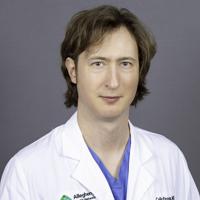
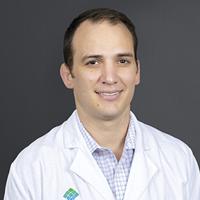
The AHN cardiac and thoracic critical care specialists are highly trained and skilled providers who are dedicating their lives to improving health outcomes for their patients. Working in a multidisciplinary function to ensure your care is coordinated across different specialties, this team is focused on delivering expert treatment using innovative and tailored procedures. Those who may be involved in your care include:

Daniel Cormican, MD

Daniel Cormican, MD

System Director
Surgical Critical Care

Ray Crouch, MD

Ray Crouch, MD

Critical Care

Jus Gill, MD

Critical Care

Amelia Morgan, DO

Amelia Morgan, DO

Critical Care

Colin Pesyna, MD

Colin Pesyna, MD

Critical Care

David Poliner, DO

David Poliner, DO

Critical Care

Philip Ramirez, MD

Philip Ramirez, MD

Critical Care

Tyler Van Dyck, MD

Tyler Van Dyck, MD

Division Director, CTICU
Medical Director, ECMO Program
Critical Care<...

Clinical trials and research

Our cardiothoracic and vascular critical care teams are engaged in advancing the best possible practice and understanding of elements of critical care. We contribute the body of medical literature through clinical research, topical reviews, and expert commentary. Our recent publications focus on ECMO and perioperative cardiothoracic and vascular critical care.

If you would like to participate in a clinical trial and help our innovative team discover groundbreaking treatment solutions, ask your doctor if you’re eligible to participate in one. Find currently active clinical trials that are open for participation.

What is a clinical trial?

Clinical trials are studies that try to answer questions about new ways to treat conditions with medications, radiation, or surgical techniques. You participate in a clinical trial only if you volunteer to do so and meet criteria for inclusion in the study, and you can stop participating in a trial at any time.

Who can join a clinical trial?

The plan for the trial, called a protocol, explains what the trial will do and how the study will be done. Based on the questions the research is trying to answer, each clinical trial protocol outlines specific criteria necessary to be eligible to join the trial.

Common criteria for entering a trial are:

  • Having a certain type of disease.
  • Having received a certain kind of therapy in the past.
  • Being in a certain age group.
  • Federal rules help ensure that clinical trials are run in an ethical manner, with your rights and safety protected. It’s to ensure that you’re not put at increased risk by participating in the trial, and that the results of the study are accurate and meaningful.

Refer your patient to an AHN specialist

There are two ways for medical professionals, who are not a part of Allegheny Health Network, to refer their patients to an AHN specialist and request their first appointment. You can:

  1. Call (412) DOCTORS 412-362-8677.
  2. Go to Find Care to find the right AHN specialist and the most convenient location. Then refer your patient, provide relevant patient details, and request an appointment directly from the doctor's profile. 

For more information about referring your patient to an AHN specialist, read the Independent Physician Referral FAQs.