

Learn more about our appointment options, second opinions, locations, referrals, and resources that are at your disposal.

Cardiac Surgery Division
About our Cardiac Surgery Division
Many heart conditions can be treated with minimally invasive procedures, but sometimes, a condition or disease may require surgery. If your cardiologist or primary care provider determines that surgery is the best course of action, you will be referred to an ANH cardiac surgeon. Our surgeons are experts at treating diseases and conditions affecting the heart, its valves, and major blood vessels. AHN surgeons take a tailored care approach, delivering a personalized treatment plan for each patient.
This patient-centered approach to care incorporates all the areas of medicine that you may need. Using a multidisciplinary team of healthcare providers and specialists ensures your treatment plan is tailored to your care needs. Your care team will be dedicated to treating your heart condition.
The cardiac care you receive is under our Cardiac Surgery Division, which is in the Department of Cardiac, Thoracic, and Vascular Surgery. The department has received awards for delivering excellent patient care. These accolades include:
- 3 out of 3 stars for Coronary Artery Bypass Grafting (CABG), Multiprocedural, and AVR + CABG by the STS Adult Cardiac Surgery DatabaseTM (ACSD).
- First hospital (Allegheny General Hospital) in Pennsylvania to receive the Mitral Valve Repair Reference Center Award from the American Heart Association® and the Mitral Foundation*.
- First in the country to successfully implant a new device that has been clinically proven to treat aortic dissections safely and effectively.
What does cardiac surgery do?
Cardiac surgery, at its core, is a specialized field of medicine that involves operating on the heart, major blood vessels directly connected to the heart, and surrounding structures within the chest. AHN cardiac surgeons provide definitive, often lifesaving, interventions when medical management alone can’t address severe heart conditions. The AHN Cardiac Surgery Division is characterized by precision, complex techniques, and continuous innovation, and is made up of highly specialized surgeons and their teams.
Your cardiac surgeon will be instrumental in providing clarity on your complex heart problems, and after reviewing the information from your multidisciplinary team, will ultimately decide whether surgery is the best treatment option. We can also provide you with second opinions and will review information from other healthcare providers.
The primary reasons why you may need cardiac surgery include:
- Correcting structural defects:
- Repairs or replaces faulty heart valves: for valves that are too narrow (stenotic) or leaky (regurgitant), ensuring blood flows efficiently in one direction.
- Closes holes in the heart: such as atrial septal defects (ASDs) or ventricular septal defects (VSDs), which can cause abnormal blood mixing and strain on the heart/lungs.
- Repairs congenital malformations: for complex defects present at birth, reshaping or rerouting structures to allow the heart to function as normally as possible.
- Restoring blood flow:
- Bypasses blocked coronary arteries: as in coronary artery bypass grafting (CABG), creating new pathways for blood to reach oxygen-starved heart muscle, relieving angina, and preventing heart attacks.
- Repairs or replaces damaged major blood vessels: such as the aorta, addressing aneurysms (bulges) or dissections (tears) to prevent life-threatening rupture.
- Improving heart function:
- Removes obstructions: clearing tumors or clots within the heart chambers.
- Supports a failing heart: implanting mechanical devices like ventricular assist devices (VADs) to help a weakened heart pump blood effectively.
- Replaces the entire heart: performing heart transplants for end-stage heart failure.
- Managing electrical abnormalities (arrhythmias):
- Creates tissue areas to block chaotic electrical signals: as in the Maze procedure for atrial fibrillation, restoring a normal heart rhythm.
- Relieving symptoms and improving quality of life:
- By correcting underlying heart problems, cardiac surgery often alleviates debilitating symptoms like chest pain, shortness of breath, and fatigue, allowing patients to resume more active and fulfilling lives.
- Extending life:
- For many life-threatening conditions, cardiac surgery can significantly improve prognosis and long-term survival.
Cardiac surgery procedures
If you have been experiencing the following cardiac issues, conditions, or diseases you may be referred to or seek care from a cardiac surgeon:
- Coronary artery disease (CAD)
- Heart valve disease
- Aortic aneurysm or dissection
- Heart failure
- Congenital heart defects
- Arrhythmias (advanced cases in coordination with our electrophysiologists team)
- Tumors of the heart
*
The Mitral Valve Repair Reference Center Award Program was created by the Mitral Foundation and the American Heart Association® to identify and recognize the nation's best hospitals and surgeons for mitral valve repair surgery based on objective performance measures. mitralfoundation.org/reference-center-award/find-a-center.
Cardiac surgery for treatment
If you need cardiac surgery to treat your heart condition, AHN is here to deliver personalized, comprehensive surgical options from highly experienced and skilled surgeons who have dedicated their professional lives to cardiac care. We also provide second opinions for coronary disease and heart valve disease. This allows you to make informed decisions with the support of your AHN multidisciplinary care team. Our cardiac surgeons deeply understand the challenges and complexities of diseases and conditions affecting the heart and deliver unmatched expert care.
Coronary artery disease
Coronary artery disease (CAD) is a very common and serious heart condition. In simple terms, it’s a disease where the major blood vessels that supply blood, oxygen, and nutrients to the heart muscle itself (called coronary arteries) become damaged or diseased. A cardiac surgeon primarily treats CAD through a procedure called coronary artery bypass grafting (CABG). The acronym is often pronounced "cabbage."
The goal of CABG is to "bypass" the blocked section of the coronary artery (or arteries) by creating a new path for blood to flow to the heart muscle. When one or more coronary arteries are severely narrowed or completely blocked by plaque buildup (atherosclerosis), the heart muscle downstream doesn't receive enough oxygen-rich blood. This can lead to angina (chest pain), shortness of breath, and a significantly increased risk of heart attack. While a cardiologist might use angioplasty and stenting for less severe or fewer blockages, CABG is typically considered for more extensive disease. Learn more about this procedure with our CABG procedure health article.
Heart valve disease
Your heart has four valves that act like one-way doors, ensuring blood flows in the correct direction through the heart's four chambers and out to the body and lungs. Heart valve disease occurs when one or more of these valves don't work properly. There are two main types of problems:
- Stenosis (narrowing): The valve's flaps (leaflets) become stiff, thickened, or fused, preventing the valve from opening completely. This forces the heart to work harder to pump blood through the narrowed opening, increasing pressure and strain on the heart muscle.
- Regurgitation (leakage or insufficiency): The valve's flaps don't close tightly, allowing blood to leak backward into the chamber it just left. This means the heart has to pump the same blood multiple times, again increasing its workload and potentially leading to enlargement of the heart chambers.
When heart valve disease becomes severe and causes significant symptoms or compromises heart function, a cardiac surgeon is typically involved. Their main role is to repair or replace the damaged heart valve(s).
Whenever possible, surgeons prefer to repair a valve rather than replace it, as repair often leads to better long-term outcomes and avoids the need for lifelong anticoagulant medication (depending on the type of valve).
If a valve is too severely damaged to be repaired, the surgeon will remove the faulty valve and replace it with a new one. There are two main types of artificial valves: mechanical valves (made from durable materials like carbon or titanium) or biological valves (provided by animal or human donor tissue).
Surgical approaches for valve repair/replacement include:
- Open-heart surgery: This traditional approach involves a sternotomy (an incision down the middle of the chest, splitting the breastbone) and often requires the use of a heart-lung machine to temporarily stop the heart during the procedure.
- Minimally invasive heart surgery: Through smaller incisions, sometimes between the ribs, which can lead to less pain, faster recovery, and smaller scars.
- Transcatheter aortic valve replacement (TAVR) or transcatheter mitral valve repair (TMVR): These are less invasive procedures typically performed by a team of interventional cardiologists and cardiac surgeons. Instead of opening the chest, a new valve or repair device is delivered via a catheter inserted into a blood vessel (usually in the leg or chest). TAVR is commonly used for aortic valve replacement in patients who are considered high-risk for traditional open-heart surgery.
The choice between repair vs. replacement, and the type of valve/surgical approach, depends on many factors, including the specific valve involved; the severity of the disease; and the patient's age, overall health, and lifestyle.
Congenital heart defects
Cardiac surgeons perform complex procedures to correct congenital heart defects (CHDs) present at birth, such as holes in the heart (septal defects), abnormal valve development, or problems with major blood vessels. The field of congenital heart surgery has advanced dramatically, allowing many children with previously fatal conditions to live long, healthy lives. Our cardiac surgeons do not focus only on performing the surgery, but also long-term planning and management in collaboration with the cardiology team.
Surgical techniques and considerations include:
- Cardiopulmonary bypass: Most complex CHD repairs require the use of a heart-lung machine, especially in infants and young children, to allow the surgeon to work on a still, bloodless heart.
- Tiny instruments: Surgeons use extremely small, specialized instruments to operate on the delicate structures of an infant's heart.
- Growth potential: For growing children, surgeons often select techniques or materials that can accommodate future growth or plan for subsequent procedures.
- Postoperative care: Intensive care unit (ICU) management is critical, especially for newborns and complex cases, with specialized nursing and medical teams.
Arrhythmias
While many arrhythmias are primarily managed by electrophysiologists using medications, catheter ablation, or device implantation (pacemakers, defibrillators), cardiac surgeons do play a crucial role in treating certain types of arrhythmias. Surgeons often get involved in treatment when arrhythmias are severe, resistant to other treatments, or when a patient is already undergoing other heart surgery.
The primary surgical approach for arrhythmias is known as the maze procedure. The goal of the maze procedure is to create a "maze" or pattern of tissue in the atria (the upper chambers of the heart) to block the abnormal electrical pathways that cause arrhythmias, particularly atrial fibrillation (AFib). AFib is the most common serious heart rhythm disorder, where the upper chambers beat chaotically and irregularly. There are two types:
- Open-heart maze (on-pump): This is often performed when a patient is already undergoing another open-heart surgery, such as coronary artery bypass grafting (CABG) or heart valve repair/replacement. The surgeon has direct access to the heart, allowing for precise creation of the lesion patterns. This is often called a "concomitant" maze procedure.
- Minimally invasive maze: For patients whose primary issue is AFib and who don't need other open-heart surgery, surgeons can perform a maze procedure through smaller incisions (e.g., between the ribs) without a full sternotomy. This can be done using techniques like video-assisted thoracoscopic surgery (VATS) and often utilizes energy-based ablation tools.
Tumors of the heart
Cardiac surgeons treat heart tumors primarily through surgical excision (removal). While heart tumors are relatively rare, when they do occur, surgery is often the primary treatment, especially if the tumor is benign and causing symptoms, or if it's malignant.
The main goals of surgical treatment for heart tumors are:
- Complete resection: To remove the entire tumor (if possible and safe) to prevent recurrence.
- Alleviate symptoms: To remove any obstruction to blood flow, improve heart function, and stop embolization.
- Establish diagnosis: Surgical removal provides tissue for pathological examination to determine if the tumor is benign or malignant, which guides further treatment if needed.
Cardiac surgeons
The AHN Cardiac Surgeons at AHN are highly skilled surgeons who provide compassionate and expert care throughout Western Pennsylvania, so you can find comprehensive care closer to home.
Allegheny General Hospital surgeons
The surgeons available at Allegheny General Hospital include:

Chair, Department of Thoracic and Cardiovascular Surgery
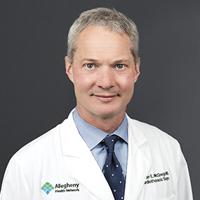
Director, Cardiac Surgery

Director, Aortic Disease Program

Director, CTEPH
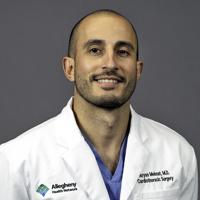
Cardiac Surgery
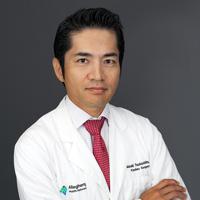
Director, Transplant and Mechanical Circulatory Support
Forbes Hospital
At Forbes Hospital, patients can see:
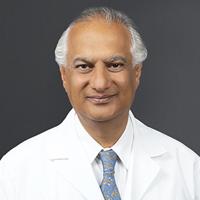
Director, Cardiac Surgery
Saint Vincent Hospital
At Saint Vincent Hospital, patients can see:

Cardiac Surgery
How to get care
If you don’t have a diagnosis, call (412) DOCTORS 412-362-8677 to make an appointment with your primary care physician. They will explore causes of your symptoms.
If you’ve recently been diagnosed, want a second opinion, or are looking for an evaluation, contact one of the cardiac surgery locations directly to schedule an appointment. An evaluation is needed if you’ve been diagnosed or want a second opinion.
Pittsburgh Allegheny General Hospital
320 East North Avenue
Pittsburgh, PA 15212
GET DIRECTIONS
Forbes Hospital
2570 Haymaker Road
Monroeville, PA 15146
GET DIRECTIONS
Erie Saint Vincent Hospital
232 West 25th Street
Erie, PA 16544
GET DIRECTIONS
Clinical trials and research
What is a clinical trial?
Clinical trials are studies that try to answer questions about new ways to treat cancer with medications, radiation, or surgical techniques. You participate in a clinical trial only if you volunteer to do so and meet criteria for inclusion in the study, and you can stop participating in a trial at any time.
Who can join a clinical trial?
The plan for the trial, called a protocol, explains what the trial will do and how the study will be done. Based on the questions the research is trying to answer, each clinical trial protocol outlines specific criteria necessary to be eligible to join the trial.
Common criteria for entering a trial are:
- Having a certain type of disease.
- Having received a certain kind of therapy in the past.
- Being in a certain age group.
Federal rules help ensure that clinical trials are run in an ethical manner, with your rights and safety protected. It’s to ensure that you’re not put at increased risk by participating in the trial, and that the results of the study are accurate and meaningful.
Currently active clinical trials
If you would like to participate in a clinical trial and help our innovative team discover groundbreaking solutions, ask your doctor if you’re eligible to participate in one. Find currently active clinical trials that are open for participation.
Refer your patient to an AHN specialist
There are two ways for medical professionals, who are not a part of Allegheny Health Network, to refer their patients to an AHN specialist and request their first appointment. You can:
- Call (412) DOCTORS 412-362-8677.
- Go to Find Care to find the right AHN specialist and the most convenient location. Then refer your patient, provide relevant patient details, and request an appointment directly from the doctor's profile.
For more information about referring your patient to an AHN specialist, read the Independent Physician Referral FAQs.
After referring your patient
Once your patient is receiving care from an AHN specialist, you can view their test results, see their treatment plan, follow their treatment progress, and collaborate with our team using the EpicCare® Link™ platform.
If you are new to EpicCare Link, or need to request your own EpicCare Link account, read: EpicCare Link for Patient Follow-up, for user instructions and new account request forms.
When EpicCare Link is not an option for a patient's AHN medical records
If you can’t access your patient's AHN test results through the EpicCare Link platform, your patient will need to complete and submit the correct AHN Medical Records Release form, based on their state of residency. Support your patient’s request by downloading the correct medical records release form for them:
AHN Medical Records Release Form for New York state residents
EpicCare® is a registered trademark of Epic Systems Corporation and used with permission.
EpicCare® Link™ is a trademark of Epic Systems Corporation and used with permission.