

Learn more about our appointment options, second opinions, locations, referrals, and resources that are at your disposal.

Vascular Surgery Division
About our Vascular Surgery Division
The AHN Vascular Surgery Division, which is under the Department of Cardiac, Thoracic, and Vascular Surgery, is comprised of experts who are focused on treating conditions affecting the arteries and veins that require surgical or minimally invasive procedural intervention. These conditions often involve blockages, narrowing, weakening, or malformations of these blood vessels.
At AHN, we take a patient-centered approach to care. Our multidisciplinary team works with other divisions and specialists to ensure your treatment plan is tailored to your care needs. We are always looking for the latest technologies and clinical trials for cutting-edge treatment.
Our state-of-the art care offerings:
- Our vascular surgeons treat the entire range of vascular surgical conditions, including venous disease, aortic aneurysms, carotid disease, lower extremity peripheral vascular disease (PVD), dialysis access, and venous compression syndromes like May-Thurner and nutcracker. To minimize the invasiveness of treatment and maximize patient outcomes, we use a combination of open and endovascular strategies.
- We are regional leaders in using Transcarotid Arterial Revascularization (TCAR) Thoracoabdominal Multi Branch Endoprosthesis (TAMBE) procedures.
- Thoracic Outlet Syndrome care, which is not typically a blood vessel issue, but our surgeons often provide help with this condition.
What is vascular surgery?
Vascular surgery is a specialized surgical field that focuses on the diagnosis and treatment of diseases of the arteries, veins, and lymphatic circulation. It primarily deals with blood vessels outside of the heart and brain, although there is some overlap, especially concerning the carotid arteries which supply the brain and the major vessels leading to and from the heart.
Vascular surgeons are experts in rebuilding, repairing, and replacing blood vessels to restore healthy blood flow throughout the body. They utilize a range of techniques, from traditional open surgical operations to advanced minimally invasive (endovascular) procedures. The scope of their practice includes:
- Arteries: Address conditions like blockages (stenosis or occlusion), weakening/bulges (aneurysms), and tears (dissections) in arteries throughout the body (e.g., carotid arteries, aorta, renal arteries, mesenteric arteries, peripheral arteries in the legs and arms).
- Veins: Treat conditions such as varicose veins, chronic venous insufficiency, deep vein thrombosis (DVT), and venous malformations.
- Lymphatics: Although less common, they may also be involved in conditions affecting the lymphatic system.
Types of conditions vascular surgeons treat include:
- Peripheral artery disease (PAD): Blockages in leg arteries causing pain, nonhealing wounds.
- Aortic aneurysms: Weaknesses in the main artery (aorta) that can rupture.
- Carotid artery disease: Narrowing of neck arteries leading to stroke risk.
- Acute arterial occlusions: Sudden blockages requiring urgent restoration of blood flow.
- Venous disease: Varicose veins, chronic venous insufficiency, some DVT management.
- Vascular trauma: Repairing damaged blood vessels from injury.
- Dialysis access: Creating and maintaining access for hemodialysis patients.
- Thoracic outlet syndrome: A group of disorders that occur when blood vessels or nerves in the space between your collarbone and your first rib (thoracic outlet) are compressed.
Vascular surgery treatment
Vascular surgery focuses on diseases and conditions of the arteries, veins, and lymphatic circulation, using both open surgical and minimally invasive (endovascular) techniques. This can help treat vascular diseases. The goal at AHN is to restore healthy blood flow, prevent complications like stroke or limb loss, and improve overall patient well-being. We provide tailored treatment options that are specific to your vascular needs and take into account your whole health to deliver positive outcomes.
Arterial conditions
These are problems or disease that affect the arteries. Arteries are the blood vessels responsible for carrying oxygen-rich blood away from the heart to the rest of the body. Arterial conditions are generally classified based on whether they involve a narrowing/blockage of the artery, a weakening/bulging of the artery, or inflammation/spasm of the artery. These diseases and conditions can include:
- Peripheral artery disease (PAD): Narrowing or blockages in arteries (most often legs) due to plaque buildup (atherosclerosis), reducing blood flow. Surgeons use endovascular procedures (angioplasty, stenting, atherectomy) to open narrowed arteries from the inside, or open bypass surgery to create a new path for blood around the blockage using a graft. This is crucial for critical limb ischemia (non-healing wounds, rest pain) to save the affected limb.
- Thoracic aortic aneurysms: A thoracic aortic aneurysm (TAA) is an aneurysm that occurs in the part of the aorta that runs through the chest (thorax). Treatment often includes thoracic endovascular aortic repair (TEVAR), which is a minimally invasive procedure.
- Abdominal aortic aneurysms: A dangerous weakening and bulging of the aorta, the body's largest artery, which can rupture if untreated. Surgeons employs Endovascular Aneurysm Repair (EVAR) by deploying a stent-graft inside the aneurysm to reinforce the wall, or open surgical repair to replace the diseased section of the aorta with a synthetic graft.
- Carotid artery disease: Narrowing of the carotid arteries in the neck that supply blood to the brain, increasing the risk of stroke. Surgeons performs Carotid Endarterectomy (CEA), an open procedure to surgically remove plaque from the artery, or Carotid Artery Stenting (CAS), an endovascular procedure to open the artery and place a stent.
- Acute arterial occlusion: A sudden, complete blockage of an artery, usually by a traveling clot, causing immediate and severe lack of blood flow to a limb (a surgical emergency). Surgeons uses open surgical embolectomy/thrombectomy to directly remove the clot, or endovascular catheter-directed thrombolysis/thrombectomy to dissolve or extract the clot. Bypass surgery may be used if the artery is damaged.
- Mesenteric ischemia: Blockage in the arteries supplying the intestines, leading to severe abdominal pain and potential bowel damage. Surgeons use endovascular angioplasty/stenting or open bypass surgery to re-establish adequate blood supply to the intestines.
- Renal artery stenosis: Narrowing of arteries to the kidneys, which can cause difficult-to-control high blood pressure or kidney dysfunction. Surgeons primarily uses endovascular angioplasty and stenting to open the narrowed renal artery.
Venous conditions
These are conditions and diseases that affect the veins, which are the blood vessels responsible for carrying deoxygenated blood back to the heart from the rest of the body. Unlike arterial diseases which are often about blockages or weaknesses preventing blood from reaching tissues, venous diseases are primarily about blood pooling or being unable to return efficiently to the heart.
- Varicose veins and chronic venous insufficiency (CVI): Enlarged, twisted veins or damaged valves in leg veins, causing blood pooling, pain, swelling, and skin changes. Surgeons performs endovenous ablation (laser or radiofrequency) to close off diseased veins from the inside, phlebectomy (surgical removal of veins through tiny incisions), or sclerotherapy (injection to close small veins).
- Deep vein thrombosis (DVT): A blood clot in a deep vein, primarily managed with medication, but surgery can be involved for specific cases. Surgeons may perform endovascular catheter-directed thrombolysis/thrombectomy to remove significant clots, especially in cases threatening limb viability.
- Prevents pulmonary embolism: Surgeons can place an IVC filter (a device in a large vein) to catch clots before they reach the lungs in patients who cannot take blood thinners.
Dialysis access
For patients with end-stage renal disease (ESRD), whose kidneys have failed and can no longer filter waste products from their blood, dialysis is a life-sustaining treatment. Hemodialysis, the most common type, requires repeated access to the patient's bloodstream to filter their blood. A vascular surgeon is essential in creating and maintaining these vital access points.
- Hemodialysis access creation and maintenance: Patients with kidney failure need a reliable access point for hemodialysis treatments. Surgeons constructs an Arteriovenous (AV) Fistula (connecting an artery and vein) or places an AV Graft (a synthetic tube) to provide durable access.
- Maintains access: Surgeons perform angioplasty and stenting to repair stenoses (narrowings) in existing fistulas or grafts to keep them functional.
Thoracic outlet syndrome
Thoracic outlet syndrome (TOS) is a group of disorders that occur when blood vessels or nerves in the space between your collarbone and your first rib (thoracic outlet) are compressed. This can cause pain in your shoulders and neck, numbness in your fingers, and other symptoms.
There are three main types of thoracic outlet syndrome:
- Neurogenic TOS: This is the most common type and occurs when nerves leading from the brain and spinal cord are compressed.
- Venous TOS: This type occurs when a vein is compressed, which can lead to blood clots.
- Arterial TOS: This is the least common and most serious type, occurring when an artery is compressed.
Symptoms of TOS can vary depending on which nerves or blood vessels are affected, but common symptoms include:
- Pain in the neck, shoulder, or arm
- Numbness or tingling in the fingers
- Weakness in the arm or hand
- Swelling or discoloration of the arm
- Cold hands or fingers
Vascular surgery specialists
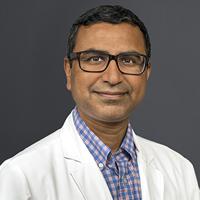
Our team of vascular surgery specialists at AHN are dedicated to treating the various conditions and diseases affecting the arteries, veins, and blood vessels. This specialized care is focused on improving individual patient health outcomes using tailored approaches and minimally invasive procedures when available. By working in a multidisciplinary manner and pursuing continuing training and education, this team is dedicated to fostering an environment of continuous learning and information sharing to collectively advance the quality of care and improve patient outcomes in vascular surgery.
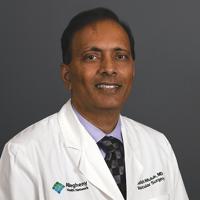
System Director,
Vascular Surgery
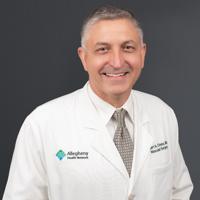
Vascular Surgery
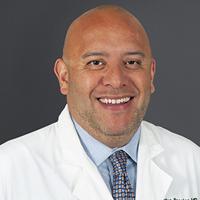
Director,
Forbes Hospital Vascular Surgery

Vascular Surgery
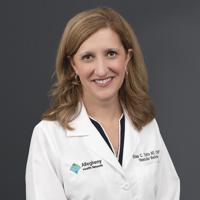
Wound & Lymphedema Care,
Vascular Medicine

Shruthi Thiagarajasubramanian, MD
Vascular Surgery

Andrew Rogers
Vascular Surgery
Vascular Surgery
How to get care
If you have not been evaluated for or diagnosed with a heart condition, call (412) DOCTORS 412-362-8677 to schedule an appointment with a general cardiologist.
To schedule a procedure with a vascular surgeon, call 412-359-8820.
Clinical trials and research
Clinical trials and research are critical to advancing breakthroughs in vascular surgery. AHN participates in numerous clinical trials and research designed to bring patients new options for care. Your AHN care team will be able to help you identify potential treatment options and connect you with clinical trials.
If you would like to participate in a clinical trial and help our innovative team discover groundbreaking solutions, ask your doctor if you’re eligible to participate in one. Find currently active clinical trials that are open for participation.
What is a clinical trial?
Clinical trials are studies that try to answer questions about new ways to treat with medications, radiation, or surgical techniques. You participate in a clinical trial only if you volunteer to do so and meet criteria for inclusion in the study, and you can stop participating in a trial at any time.
Who can join a clinical trial?
The plan for the trial, called a protocol, explains what the trial will do and how the study will be done. Based on the questions the research is trying to answer, each clinical trial protocol outlines specific criteria necessary to be eligible to join the trial. Common criteria for entering a trial are:
- Having a certain type of disease.
- Having received a certain kind of therapy in the past.
- Being in a certain age group.
- Federal rules help ensure that clinical trials are run in an ethical manner, with your rights and safety protected. It’s to ensure that you’re not put at increased risk by participating in the trial, and that the results of the study are accurate and meaningful.
Refer your patient to an AHN specialist
There are two ways for medical professionals, who are not a part of Allegheny Health Network, to refer their patients to an AHN specialist and request their first appointment. You can:
- Call (412) DOCTORS 412-362-8677.
- Go to Find Care to find the right AHN specialist and the most convenient location. Then refer your patient, provide relevant patient details, and request an appointment directly from the doctor's profile.
For more information about referring your patient to an AHN specialist, read the Independent Physician Referral FAQs.
After referring your patient
Once your patient is receiving care from an AHN specialist, you can view their test results, see their treatment plan, follow their treatment progress, and collaborate with our team using the EpicCare® Link™ platform.
If you are new to EpicCare Link, or need to request your own EpicCare Link account, read: EpicCare Link for Patient Follow-up, for user instructions and new account request forms.
When EpicCare Link is not an option for a patient's AHN medical records
If you can’t access your patient's AHN test results through the EpicCare Link platform, your patient will need to complete and submit the correct AHN Medical Records Release form, based on their state of residency. Support your patient’s request by downloading the correct medical records release form for them:
AHN Medical Records Release Form for New York state residents
EpicCare® is a registered trademark of Epic Systems Corporation and used with permission.
EpicCare® Link™ is a trademark of Epic Systems Corporation and used with permission.