

Early Aggressive Therapy and Multidisciplinary MS Care at AHN
Published Apr 2, 2026
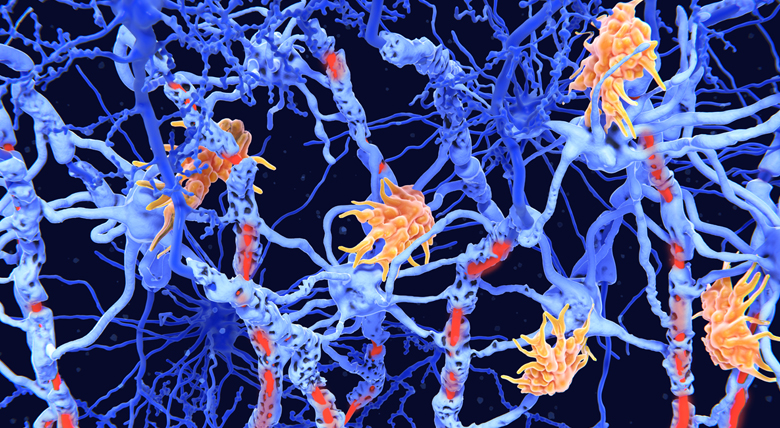
Care for multiple sclerosis (MS) is rapidly evolving, with growing evidence supporting earlier, higher-efficacy treatment to slow disease progression and improve long-term outcomes. At the AHN Neuroscience Institute Multiple Sclerosis Treatment Center, clinicians are at the forefront of this approach, utilizing early intervention and coordinated multidisciplinary care to stabilize inflammation and manage the wide range of symptoms associated with MS.
Advancing MS treatment through early intervention
At AHN, there has been a shift toward early aggressive therapy to treat MS, particularly for newly diagnosed patients with active disease. This strategy has led to improved inflammatory control, with relapses and new lesion development becoming increasingly uncommon in treated patients.
The next frontier involves addressing chronic “smoldering” inflammation, which is thought to contribute to gradual progression even in patients who appear stable. Current medications primarily target acute lymphocyte-driven inflammation, whereas emerging oral therapies in late-stage clinical trials aim to better address these chronic inflammatory processes.
“We’re actively identifying patients who may benefit from these novel medications once approvals are granted,” said Troy T. Desai, MD, neurologist at AHN. “We hope we can help patients not seeing results from their current pharmacologic therapies.”
Personalized MS treatment and symptom management
The expanding range of disease-modifying therapies (DMTs) has transformed how clinicians tailor treatment. There are now more than 20 medications approved for relapsing-remitting MS, offering providers flexibility in tailoring therapy to disease severity and patient preference.
Younger patients with highly active disease are more likely to benefit from higher-efficacy immunosuppressive therapies, whereas older, stable patients may transition to safer immunomodulatory agents as inflammatory activity naturally declines. This personalized approach optimizes long-term outcomes while balancing patient safety.
“We have the ability to treat not just the neurologic inflammation, but the cognitive, emotional, and functional symptoms that come with MS,” said Dr. Desai. “The center is staffed by two fellowship-trained MS neurologists, with plans to expand, and supported by specialized staff across disciplines.”
Advanced diagnostics and subspecialty expertise
The AHN Neuroscience Institute Multiple Sclerosis Treatment Center combines the latest diagnostic technology with subspecialty expertise to support long-term management of the disease.
Advanced imaging plays a critical role in evaluating disease activity. The team utilizes 3 Tesla (3T) MRI technology and specialized software capable of measuring lesion size and detecting subtle interval changes, particularly in the spinal cord, to enhance longitudinal monitoring.
By enabling clinicians to more precisely track disease activity, these monitoring tools help identify when patients may benefit from additional supportive services. Patients can access specialized care and resources as their symptoms evolve, including:
- Physical therapy services that provide gait training, balance evaluation, and assistive device recommendations when appropriate.
- Neuropsychology and psychiatry services to support patients experiencing cognitive changes, anxiety, or depression related to MS.
- Education on physical activity, nutrition, and symptom triggers to encourage lifestyle changes before escalating to pharmacologic treatment.
How to refer
Early referral is critical to optimizing patient outcomes, as current therapies are preventive rather than reparative. Providers should consider referral for patients with suspected MS, particularly younger individuals presenting with optic neuritis, focal weakness or numbness, vertigo, balance disturbance, or gait changes.
Call 412-359-8850 to refer your patient or learn more about the advanced diagnostics, leading-edge therapies, and coordinated care available at the AHN Neuroscience Institute Multiple Sclerosis Treatment Center.
Published Apr 2, 2026
About Troy T. Desai, MD
Troy T. Desai, MD, treats patients with multiple sclerosis, neurosarcoidosis, transverse myelitis, neuromyelitis optica, and demyelinating disease. He supports community outreach for multiple sclerosis. He received the Drexel University College of Medicine 2019 Dean’s Special Award for Excellence in Clinical Teaching at Allegheny Health Network. He speaks fluent English, Hindi, and Gujarati.
The AHN Neuroscience Institute is an internationally recognized academic referral center, offering advanced treatment for all neurological conditions, including leadership in complex spine and brain surgeries, comprehensive stroke care, and specialized therapies for movement disorders. We are committed to pioneering new therapies and procedures, ensuring patients receive leading-edge technologies and clinical trials for the best possible outcomes.