

What to Know About Robotic-Assisted Colorectal Cancer Surgery at AHN Saint Vincent
Modified Nov 11, 2026
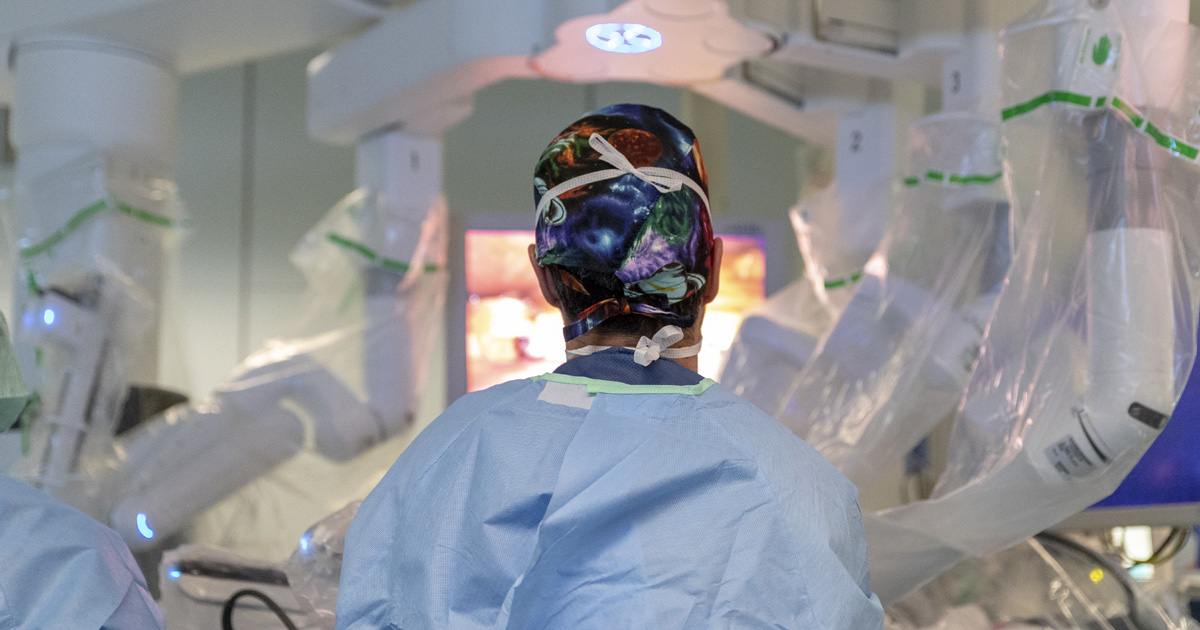
Learning you may need colon cancer surgery can bring a lot of questions. What will the procedure involve? How long will you be in the hospital? What will recovery look like?
At AHN Saint Vincent, robotic-assisted surgery offers a minimally invasive option for select patients. This technology combines a surgeon’s expertise with enhanced precision and smaller incisions, which can mean a quicker recovery for patients.
How does robotic-assisted surgery work?
For some patients with a colon cancer diagnosis, a robotic-assisted approach can offer advantages over traditional open surgery or standard laparoscopy. The robotic platform gives the surgeon a highly magnified view of the surgical area and greater control and stability.
“Robotic-assisted surgery is neither an autonomous nor an experimental method,” says Selim Gebran, MD, a colorectal surgeon at AHN. “It is a well-established, highly regulated technology entirely directed in real time by a human surgeon.”
During the procedure, the surgeon uses the robotic system to control small surgical instruments. The technology translates the surgeon’s hand movements into precise actions, allowing the surgeon to operate through small incisions while reducing the risk of injury to nearby tissue and organs.
Benefits of robotic-assisted surgery
Compared with traditional open surgery, this minimally invasive approach can help patients spend less time recovering and return to their daily lives sooner. Potential benefits for patients include:
- Smaller incisions
- Less bleeding
- Less pain after surgery
- Shorter hospital stays
- Quicker healing
- An earlier return to everyday activities
These benefits can make robotic-assisted surgery an appealing option for patients, but every patient and procedure is different. Your diagnosis, overall health, and treatment needs will help your care team determine which surgical approach is best for you.
Comprehensive colorectal cancer care at AHN Saint Vincent
At AHN Saint Vincent, robotic-assisted surgery is one of several treatment options available to patients. The colorectal team has more than 30 years of combined experience treating colon and rectal cancers, as well as other conditions such as diverticulitis and inflammatory bowel disease.
Patients receive care from a team that includes surgeons, physician assistants, nurses, surgical technologists and medical assistants. For those with colorectal cancer, nurse navigators also provide guidance and support throughout treatment.
“We strive to deliver high-quality, efficient care, ever mindful of the empathy and attention every patient deserves,” says Dr. Gebran.
Encourage your loved ones to get screened
A colorectal cancer diagnosis can raise questions about cancer risk among family members. Encourage your loved ones to talk with their health care providers about their own risk and when they should begin screening.
For people at average risk, colorectal cancer screening generally begins at age 45. Those with a family history may need to start sooner. A colonoscopy can find cancer early and help prevent it by allowing doctors to remove growths before they become cancer. At-home stool tests may also be an option for some people.
Explore colorectal cancer treatment options
Facing a colorectal cancer diagnosis and treatment can feel overwhelming, but you don't have to navigate it alone.
At AHN Saint Vincent, the colorectal team works with each patient to develop a treatment plan based on their needs. With options like robotic-assisted surgery, patients can receive advanced care designed to support their recovery.
To learn more about colorectal cancer surgery or schedule an appointment, call 814-453-2777.
Published Nov 11, 2026
Modified Nov 11, 2026
About Selim Gebran, MD
Selim Gebran, MD, is a colorectal surgeon specializing in robotic surgery, minimally invasive colectomy, rectal cancer, and ostomy reversal, with clinical interests in colorectal cancer and inflammatory bowel disease (IBD). He aims to deliver high-quality, efficient care — ever mindful of the empathy and attention each patient deserves. Dr. Gebran attended American University of Beirut in Beirut, Lebanon. His residency and fellowship in colon and rectal surgery were completed with AHN Allegheny General Hospital in Pittsburgh, Pennsylvania. Dr. Gebran is certified by the American Board of Surgery and is a member of both the American College of Surgeons and the American Society of Colon and Rectal Surgeons. He speaks English, French, and Arabic. Dr. Gebran welcomes patients ages 18 and older.
AHN Saint Vincent Hospital, Erie, Pa., is a part of Allegheny Health Network (AHN), a 14-hospital academic health care system serving the greater Western Pennsylvania and southwestern New York regions. Founded in 1875 as Erie’s first hospital, AHN Saint Vincent is a 371-bed hospital that employs 2,812 health care professionals, including 725 physicians. AHN Saint Vincent’s medical and surgical teams provide advanced care for patients with health needs.