

Exploring Spine Surgery Options at AHN Saint Vincent Hospital
Modified Oct 7, 2026
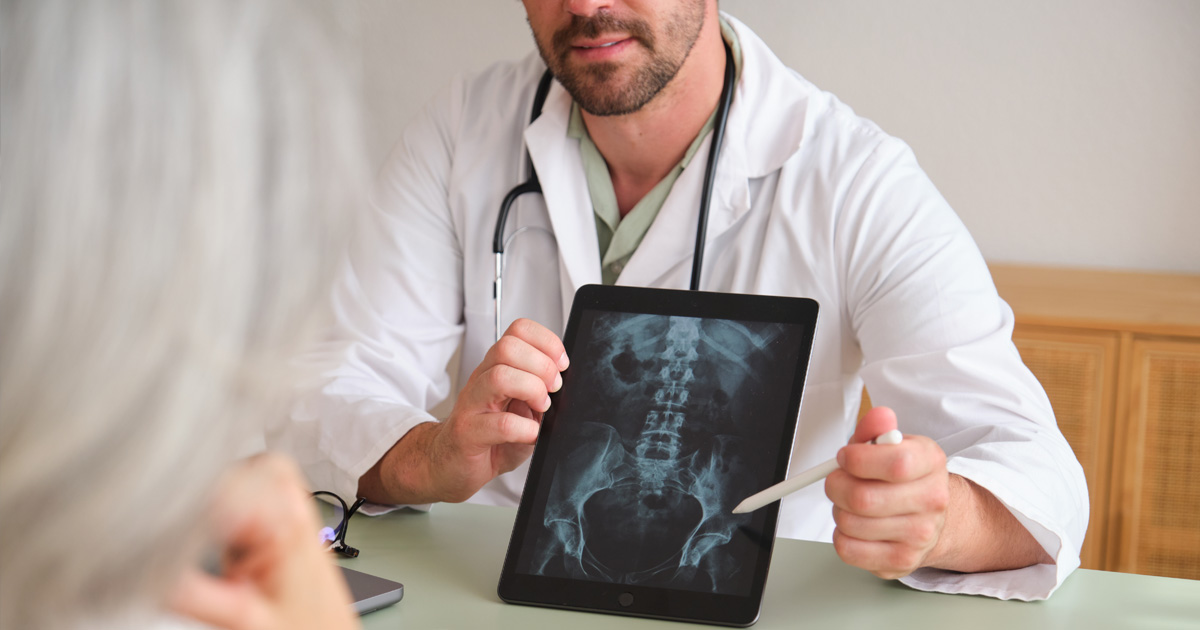
Living with back or neck pain can take a toll on your whole body and overall well-being. It can make it hard to move, work, sleep, or stay active.
If you’re dealing with pain due to spinal arthritis, slipped discs, or spinal stenosis, specialists at AHN Saint Vincent Hospital are here to help you understand your symptoms and treatment options so you can get back to living more comfortably.
Symptoms of common spine conditions
Back and neck pain can feel different depending on the cause. Here’s what you may notice with some of the most common spine conditions:
Spinal arthritis
Arthritis in the spine is often caused by normal “wear and tear” that happens over time as people age. Common symptoms include:
- Aching or stiffness in the back or neck
- Pain that gets worse with activity
- Reduced flexibility
Sometimes, arthritis can also lead to nerve pressure, causing pain that travels into the arms or legs.
Slipped discs
Slipped discs are very common, especially as people get older. Many people have disc changes without symptoms. But when a disc presses on a nerve, it can lead to:
- Sharp or shooting pain in or to the arm or leg
- Numbness or tingling in the arm or leg
- Pain with movements like bending, lifting, or twisting
Spinal stenosis
Stenosis of the spine means narrowing in the spaces where nerves travel. This narrowing can lead to:
- Leg pain when walking
- Weakness or heaviness in the legs
- Feeling like your legs may give out
Spine surgery is not usually the first step
For many people, back and neck pain can improve without surgery. Before spine surgery is considered, your care team at Saint Vincent will usually recommend:
- Physical therapy
- Injections
- Exercise and lifestyle changes
These remedies can often improve strength, flexibility, and pain — sometimes enough to avoid surgery.
When is spine surgery recommended?
Spine surgery is recommended only when your care team finds a clear reason for your pain, and it is likely to help more than other treatments.
“We don’t recommend surgery unless we believe it will truly help,” said Alejandro Matos Cruz, MD, a neurosurgeon at AHN Neuroscience Institute. “Every patient is different, so every patient is going to require a different approach.”
In some cases, surgery can quickly relieve pain. In others, it helps prevent symptoms from getting worse and improves daily function.
Spine surgery types
There are different types of spine surgery, and each one is chosen based on your specific condition. Your care team will look at your symptoms, imaging results, and overall health to recommend the option that is safest and most likely to help you.
“There isn’t one surgery that works for everyone,” said Dr. Matos Cruz. “With the range of options available today, we can tailor treatment to your specific problem.”
Decompression surgery
For most patients, especially those with spinal stenosis, the main goal of surgery is to relieve pressure on the nerves.
Decompression surgery works by carefully removing small amounts of bone or thickened tissue that are narrowing the space around the nerves. This helps “open up” the area so nerves can function better.
In many cases, procedures can be performed using minimally invasive techniques, which use smaller incisions and are designed to reduce impact on surrounding muscles.
Motion-preserving surgery
If your spine is still stable — meaning it is moving normally without shifting out of place — motion-preserving procedures may be recommended. These surgeries treat the problem causing you pain, while helping your spine keep its natural movement. They include:
- Disc replacement, which replaces a damaged disc to maintain movement between the bones.
- Foraminotomy, which widens the space where nerves exit the spine to relieve pressure.
- Facet joint replacement, which replaces damaged joints to reduce pain while helping the spine move more naturally.
These procedures can help maintain flexibility and range of motion. Many of these techniques can also be performed using minimally invasive techniques, depending on the patient and the condition being treated.
Fusion surgery
If removing bone or tissue would make your spine unstable, or if the spine is already moving irregularly, fusion surgery may be recommended. Fusion connects two or more bones in the spine to help stabilize the area and prevent painful movement.
Because the bones need time to heal into one solid piece, recovery may take several months and involve more restrictions early in the healing process. Your care team will guide you through a personalized plan so you know what to expect at each step and can safely return to your daily activities.
Explore a path to relief
With the right care and guidance, many patients find meaningful relief from back and neck pain.
If you’re experiencing ongoing symptoms, start by talking with your primary care provider. They can help guide early treatment and determine if you may benefit from seeing a specialist.
If advanced care is needed, the team at AHN Saint Vincent Hospital is here to provide expert evaluation and treatment options tailored to your needs.
Published May 29, 2026
Modified Oct 7, 2026
Alejandro Matos Cruz, MD, is a neurosurgeon specializing in the treatment of conditions affecting the brain and spine. Dr. Matos Cruz provides expert care and performs cutting-edge procedures to address pain such as spinal cord stimulator implantation. He also specializes in sacroiliac (SI) joint fusion, facet joint replacement, and other minimally invasive surgical solutions that address a wide range of neurological disorders. Dr. Matos Cruz earned his medical degree from the University of Puerto Rico School of Medicine in San Juan, Puerto Rico. He completed his neurosurgery residency at AHN Allegheny General Hospital in Pittsburgh, Pennsylvania. Dr. Matos Cruz is committed to delivering high-quality, patient-centered care, helping individuals navigate complex neurological conditions to live their best life. He welcomes patients ages 18 and older.
You can rely on the neurosurgeons and neurologists at Saint Vincent hospital. The doctors you see have years of experience — decades in many cases — and are board-certified. They remain fixtures in the community, with well-deserved reputations for leading care.
Together, the neurology and neurosurgery team sees many brain, spine and nerve conditions and provides a range of treatments. We use special image guidance for all brain tumor and operations and for some complex spine surgery.