

Early Referral Expands Treatment Options for Pediatric Scoliosis Patients
Published Sep 9, 2026
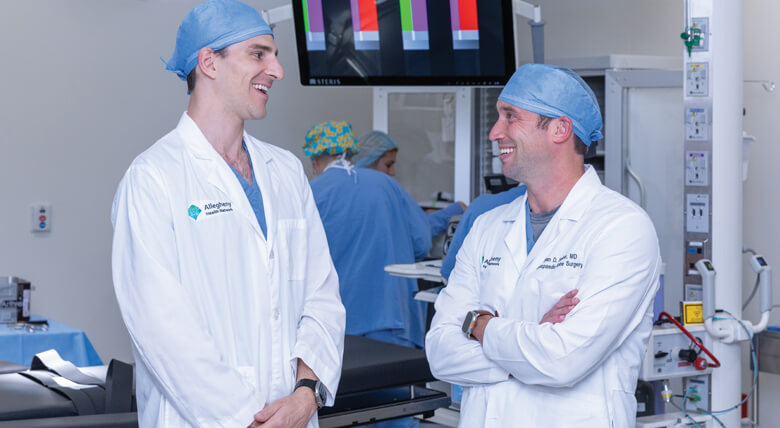
Early identification of pediatric scoliosis can significantly expand treatment options and, in many cases, help children avoid surgery altogether. At AHN Wexford Hospital, the Pediatric Orthopaedic Institute is expanding access to comprehensive pediatric spine care, giving referring providers a local resource for early evaluation, non-surgical management, and advanced surgical treatment when needed.
Knowing when to refer can make all the difference
Patients should be considered for specialty evaluation when spinal curves reach approximately 20 to 25 degrees, or when bracing becomes a consideration based on routine scoliosis screening. Younger children diagnosed with scoliosis should also be evaluated promptly, as earlier intervention often provides more opportunities for successful non-surgical treatment before spinal curves progress.
“The younger a person is with diagnosed scoliosis, the more important it is that they receive closer evaluation,” said Ryan Sauber, MD, an orthopaedic surgeon with AHN Pediatric Orthopaedic Institute.
While scoliosis is one of the most common reasons for referral, the pediatric spine team also evaluates children with:
- Persistent back pain
- Spondylolysis (pars fractures)
- Disc herniations
- Spinal deformities
- Leg pain related to spinal conditions
The Pediatric Orthopaedic Institute sees patients from birth through young adulthood, providing families with access to nationally recognized specialists who deliver expert, kid-focused care throughout a child's growth and development.
Prioritizing non-surgical care whenever possible
The pediatric spine program tailors treatment to each child's condition, with the goal of helping as many patients as possible avoid surgery. Early referral allows patients to receive effective non-surgical treatment, while ensuring those who do need surgery have access to advanced, coordinated pediatric spine care close to home.
"The vast majority of patients are successfully managed non-surgically," said Dr. Sauber. " Our focus is getting children into the best non-surgical treatment as early as possible to reduce the likelihood that surgery will become necessary."
The pediatric spine team works closely with physical therapists specially trained in the Schroth Method, a specialized approach to scoliosis rehabilitation, along with experienced orthotists to slow curve progression and improve function.
For some patients, however, scoliosis continues to progress despite conservative management. When surgery becomes the best option, the team focuses on delivering the safest possible care while protecting each patient's long-term spinal health.
Advanced surgical care supports faster recovery
When surgery is necessary, AHN combines advanced technology with evidence-based recovery protocols designed specifically for pediatric patients. Robotic spine surgery and intraoperative CT imaging are used in combination to improve surgical precision, while multimodal pain management and coordinated rehabilitation through an Enhanced Recovery After Surgery (ERAS) pathway supports optimal recovery.
This coordinated approach helps to:
- Reduce post-operative pain
- Accelerate mobility of the spine
- Minimize post-operative complications
- Shorten hospital stays, allowing patients to return home faster
- Promote quicker returns to school and extracurricular activities
Most patients return home within two to three days after surgery, resume many daily activities within four to six weeks, and return to school in six to eight weeks. Many young athletes can safely resume sports within three to six months, with contact sports often possible within a year.
Long-term monitoring supports lifelong spinal health
Care through the pediatric spine program extends well beyond a single office visit or surgical procedure. Many children with scoliosis are followed throughout childhood — and sometimes into early adulthood — by our skilled multidisciplinary team to monitor spinal growth, evaluate treatment progress, and adjust care plans as needed.
Throughout that journey, ongoing monitoring is supported by the Institute's low dose imaging systems. Because children with scoliosis often require repeated imaging over many years, this technology significantly reduces radiation exposure while providing detailed images that support accurate diagnosis, treatment planning, and long-term surveillance of spinal growth.
How to refer
To learn more or refer a patient to the Pediatric Orthopaedic Institute at AHN Wexford Hospital, call 844-MD-REFER 844-637-3337, submit a referral online, or message Dr. Sauber through Epic.
Published Sep 9, 2026
About Ryan D Sauber, MD
Dr. Sauber treats a variety of adult and pediatric spinal conditions including scoliosis, adult cervical and lumbar degenerative diseases, spinal trauma, and tumors. He utilizes endoscopic surgery, minimally invasive techniques and robotics. He is now credentialed at Wexford Hospital and board certified by American Board of Orthopaedic Surgery (ABOS).
About AHN Pediatric Institute
The AHN Pediatric Institute delivers high-quality, compassionate care through specialized pediatric programs including allergy, asthma, behavioral health, endocrinology, ENT, and orthopaedics. We offer a patient-centered approach, focusing on all aspects of young patients' needs in a supportive and collaborative environment.